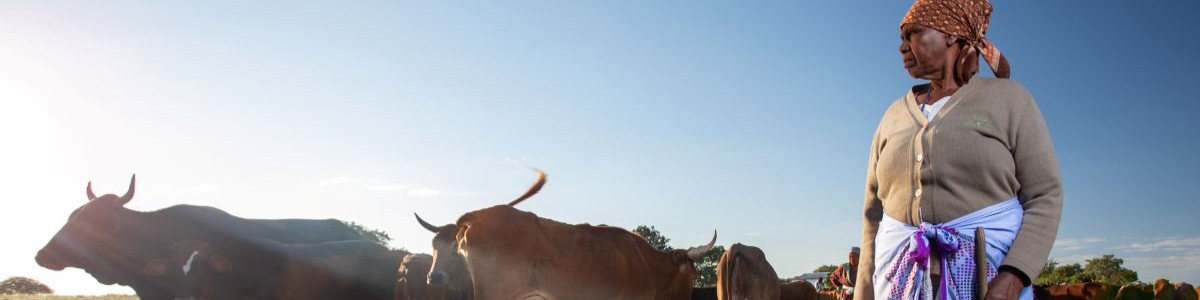
Gestión Integrada de Tierras y Aguas del Sistema de Humedales del Gran Amanzule

País: Ghana Líder del proyecto: Universidad de Educación, Winneba – Ghana Resumen: El Humedal del Gran Amanzule (GAW) está amenazado por la minería artesanal, el cambio climático, las plantaciones de caucho y la agricultura de subsistencia, a pesar de su apoyo ecológico a la fauna y la flora. Las principales intervenciones se han centrado menos en los sistemas hidrológicos del SAM. Este proyecto pretende colmar esta laguna de conocimientos mediante paquetes de trabajo: análisis de los sistemas hidrológicos y los servicios ecosistémicos; agricultura climáticamente inteligente para los hogares; y desarrollo de herramientas de decisión e informes políticos para mejorar los esfuerzos de conservación. Los resultados previstos son i) mapas de uso del suelo y base de datos espaciales que indiquen las zonas de degradación significativa para informar sobre las actividades de restauración; ii) mapas hidrológicos e informes sobre el nivel de contaminación; iii) informe sobre los servicios ecosistémicos para comprender el beneficio ecosistémico de las VAG para los hogares y los retos que afectan a los servicios; iv) mejora de las actividades de subsistencia de más de 400 hogares que recibirán formación en apicultura, agrosilvicultura y viveros de especies autóctonas; v) mapas e informes que indiquen el paisaje restaurado; vi) herramientas de apoyo a la toma de decisiones para que los funcionarios del gobierno y las partes interesadas mejoren la planificación y las decisiones ecológicas; y vii) difusión de informes y notas sobre políticas. El objetivo último es ayudar a mejorar los medios de subsistencia de los hogares y los servicios ecosistémicos de la VAG bajo las crecientes presiones del hombre y el cambio climático. Asimismo, ayudar a Ghana a conservar sus humedales y mantener sus Contribuciones Nacionales Determinadas con respecto al carbono.

NATIVE: Sustainable Riverscape Management for Resilient Riverine Communities

Project Summary

Countries: Colombia, Dominican Republic

Delivery Partner: University of Lincoln

Project Partners: Fundación Herencia Ambiental Caribe, Centro Recuperación de Ecosistemas Acuáticos – Fundación CREACUA, Parques Nacionales, Colombia, The Nature Conservancy, Fondo Agua Yaque del Norte, Inc

Principal Investigator: Dr Luca Mao, Associate Professor, School of Natural Sciences, University of Lincoln

NATIVE aims to break the cycle of environmental degradation and livelihood loss in tropical river floodplains by integrating dialogue with local communities, advanced modelling tools, and field data. The goal is to develop a sustainable, evidence-based approach to floodplain use that preserves ecosystems while supporting food production.

Challenge

Rivers represent only 0.01% of Earth’s water resources but host 6% of all species and a third of vertebrate species. River corridors provide economic and health benefits and a wide range of ecosystem services but are significantly impacted by anthropogenic disturbances and threatened by climate change.
Tropical river floodplains host precious biodiversity but are affected by a range of human disturbances at the scale of basin and river network such as forest clearcut, excessive erosion, sediment mining, and occupancy of flood-prone areas. Floodplains tend to host deprived communities increasingly exposed to flooding risks due to climate change.

Insight

The project aims at breaking the vicious circle of unhealthy fluvial ecosystems driving livelihood losses, exacerbated by climate change that increases flooding and droughts. The project couples dialogue with local/Indigenous communities and stakeholders, advanced modelling tools, and field data collection.
We are developing an evidence-based, bottom-up, and scalable new paradigm of floodplain use that reduces the impacts on the eco-geomorphological diversity of rivers while improving the use of the floodplains to increase the sustainable production of food. The concept is being tested in two study sites (Tomarrazon River in Colombia and Yaque del Norte river in the Dominican Republic) where local households and stakeholders will reduce their impacts on the eco-geomorphological diversity of rivers while improving livelihood.

Collaboration

NATIVE brings together an international team of experts in fluvial science, sustainable development, and economy of natural resources.

• The University of Lincoln (UK) provides leadership in remote sensing, surveys in fluvial environments and hydrological modelling.
• Fundación CREACUA has expertise in working with local communities to restore river systems and has long-standing knowledge and experience in conducting hydromorphological river surveys.
• Fundación Herencia Ambiental Caribe promotes peace and sustainable human development through the protection of natural resources. They lead on the participatory activities and the implementation of the local pilots.
• The Nature Conservancy focuses on tackling the climate and biodiversity crises. They coordinate the efforts in the Dominican Republic, ensuring engagement with local stakeholders and upscaling potential in the region.
• The Fondos de Agua Yaque del Norte channels investments to promote water supply and conservation of ecosystem services. They are in charge of the participatory activities and pilot in the study site.

We aim at breaking the vicious circle of unhealthy fluvial management that causes loss of ecosystem services and livelihood for riverine communities, and also worse flooding and drought issues in the context of the climate emergency. We couple dialogue with local and Indigenous communities and stakeholders, advanced modelling tools, and field data collection. We are developing an approach to reduces the impacts on the eco-geomorphological diversity of rivers while improving the use of the floodplains to increase the sustainable production of food.

Dr Luca Mao, Associate Professor, School of Natural Sciences, University of Lincoln


Dr Luca Mao

Dr. Luca Mao is a fluvial geomorphologist based at the Department of Geography at the University of Lincoln (UK). He specializes in river science, river morphodynamics, hydrology and flood management. He is passionate about understanding the health and functionality of rivers,  and about working with natural river processes and riverine communities to restore natural functions of catchments and their ecosystem services.


Photo Credits:

  1. Community engagement activity in the Tomarrazon River study site (Colombia).
  2. Flooding is a common occurrence in the floodplains if the Yaque del Norte River (Dominican Republic).
  3. Installing a water depth sensor in the Tomarrazon River (Dominican Republic).
  4. Drone imagery of the study site in the Yaque del Norte River (Dominican Republic).