Communicating the Impact of Under-Used Plants in Bilate, Ethiopia
The productivity of a soil and the response of crops to changing climatic conditions are directly related to soil organic matter content.
In Ethiopia, soil organic matter is declining. This results in soils that are less productive, threatening livelihoods, especially for low-income farmers. To reduce soil degradation, much research and extension effort has been focussed on encouraging farmers to incorporate more organic wastes into their soils, usually as compost.
However, increasing use of organic wastes for household energy, due to increasing populations and deforestation, has resulted in limited success of these schemes, and consequent continued and unabated soil degradation.
To side-step competing demands for organic wastes, the CROSSROADS project aims to use under-utilised plants to increase organic inputs and reduce losses, so adding value to these species and increasing biodiversity, while also improving livelihoods and climate resilience.
In the Bilate catchment of Southern Ethiopia, CROSSROADS has worked with communities to identify 19 under-utilised crop, grass and tree species with high potential to improve soil health.
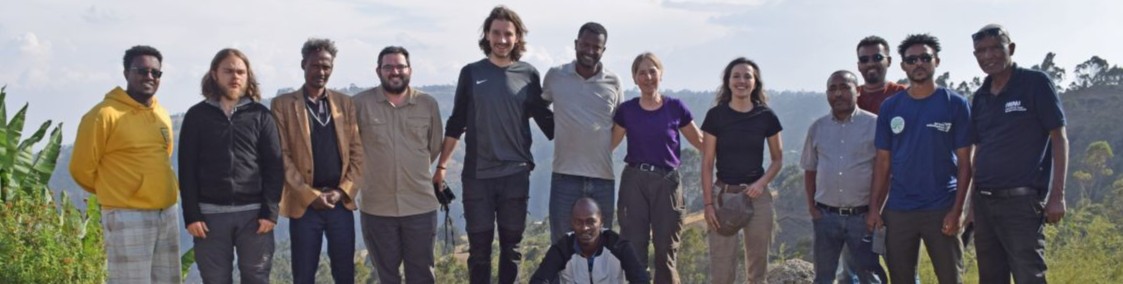
During the dry season in February and March 2026, teams from the Central Ethiopian Agricultural Research Institute (CEARI), Hawassa University (HU), the International Water Management Institute (IWMI) and the University of Aberdeen (UA) began field work to characterise the impacts on soil health, climate resilience, livelihoods and biodiversity of three of these species; Korch or coral tree (Erythrina brucei Schweinf.), Wanza or Sudan teak (Cordia Africana) and Kerkeha or highland bamboo (Yushania alpina – K. Schum.).
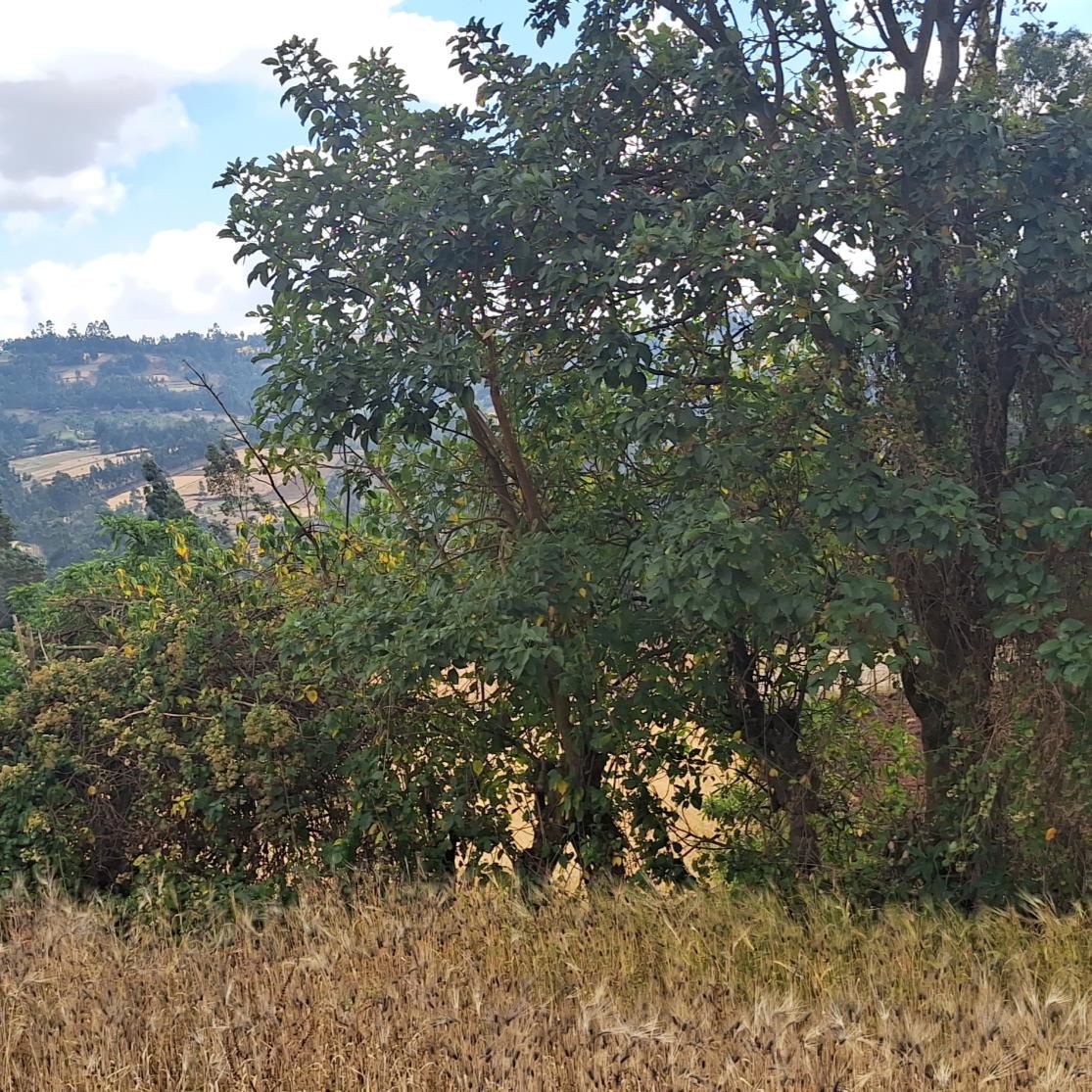
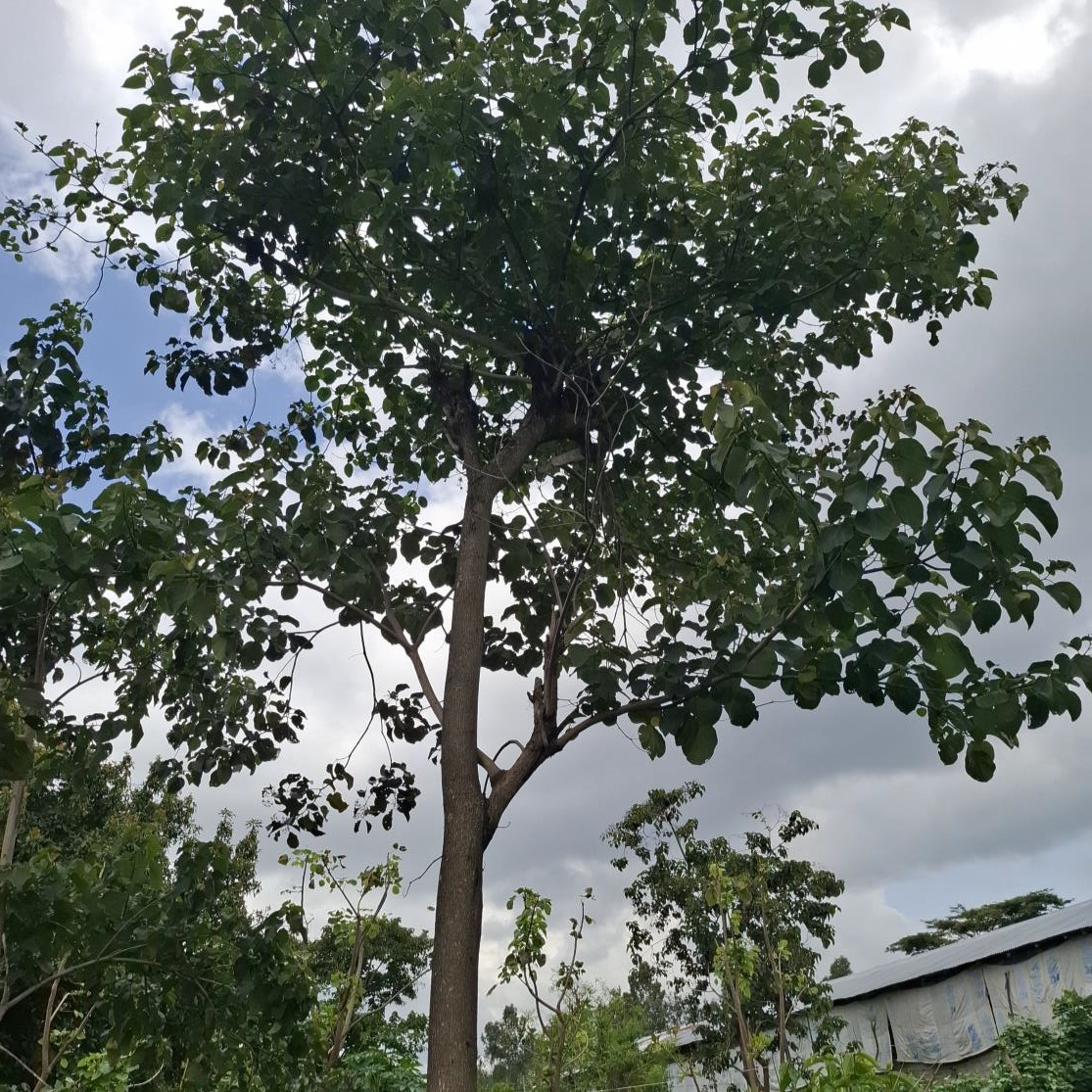
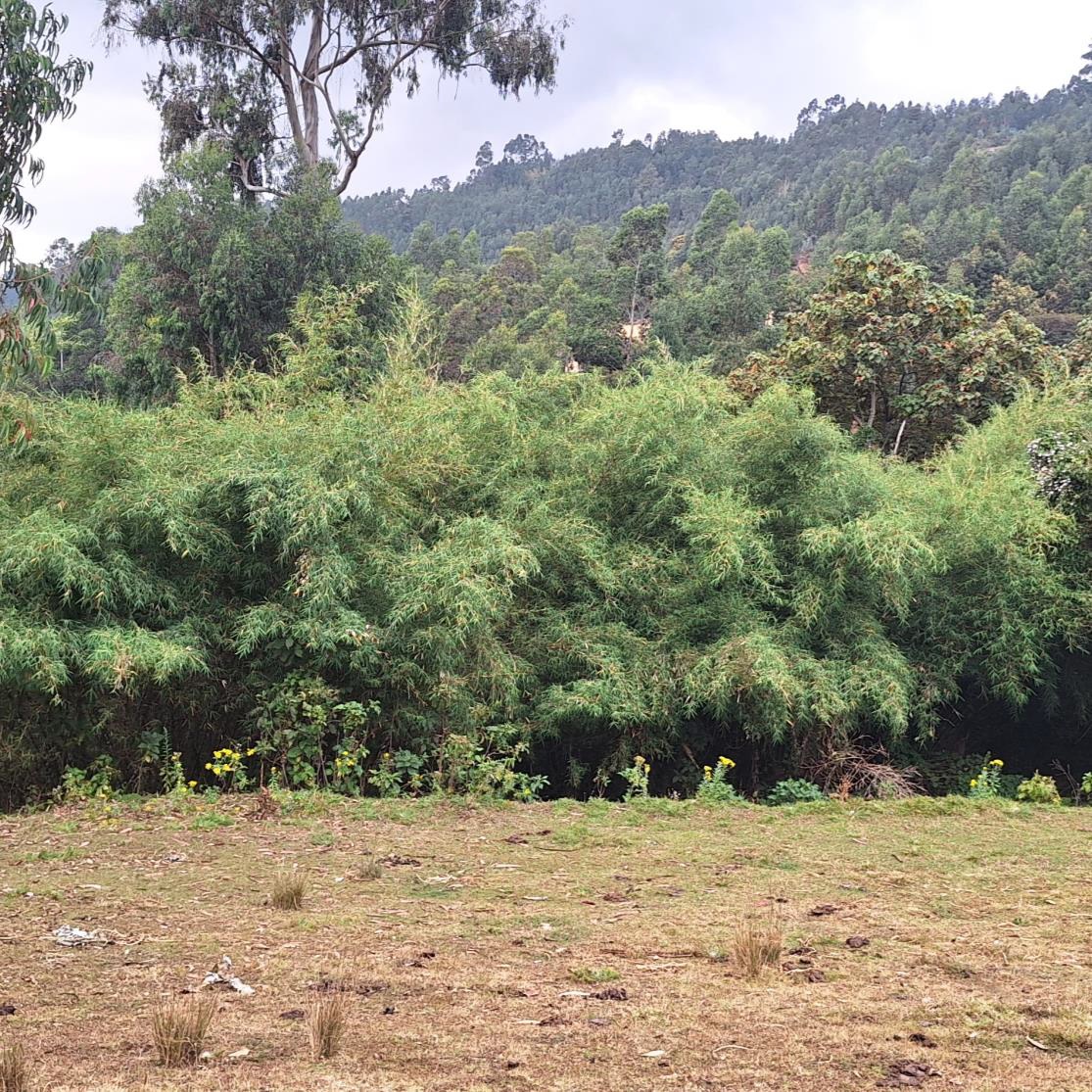
Images: 1. Korch – nitrogen fixing boundary tree, easily propagated by cuttings with soil stabilising roots (Wolde Mekuria, IWMI) 2. Wanza – tree with soil stabilising roots and organic matter input from leaf fall (Wolde Mekuria, IWMI) 3. Kekeha – grass species with dense structure of soil stabilising roots (Wolde Mekuria, IWMI).
Soil Studies in the Field and Lab
Team 1, led by Beth Evans, took soil cores from under these plants and from nearby farmland. These samples will be analysed in the laboratory to measure bulk density, soil organic matter, nutrients, pH and microbial activity. The team also measured water content, infiltration, soil temperature and penetration resistance directly in the field.
Team 2, led by Desalegn Tegegne Mengistu, took samples of soil to characterise erosion using a large-scale rainfall simulator in the lab, while Abdul Walid Salik’s Team 3 used a smaller, portable rainfall simulator to measure erosion directly in the field.
Team 4, led by Jacques Holford, tested how the roots of each species help to stabilise soils using a newly designed shear vane. They also collected root samples for detailed analysis in the laboratory.
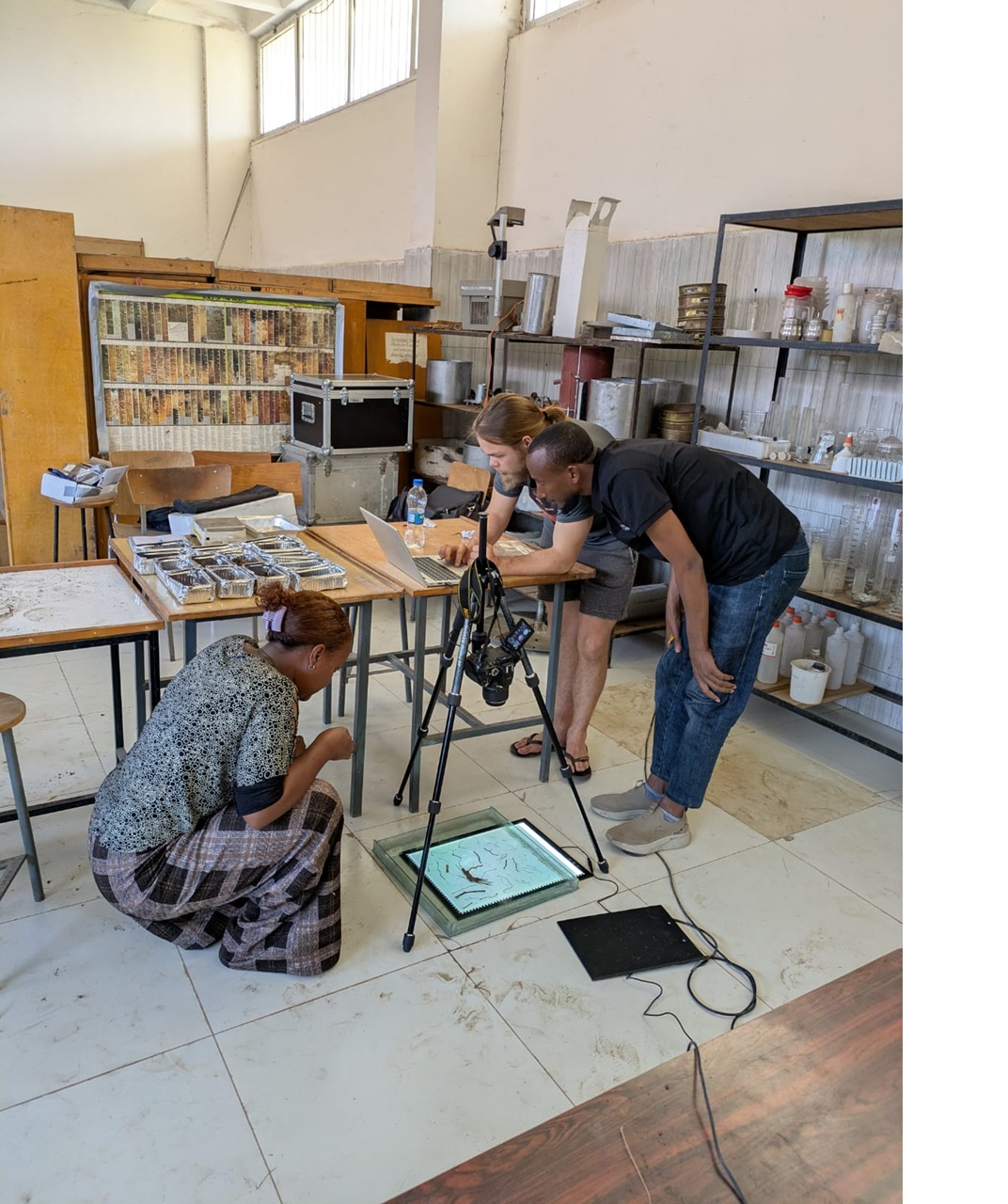
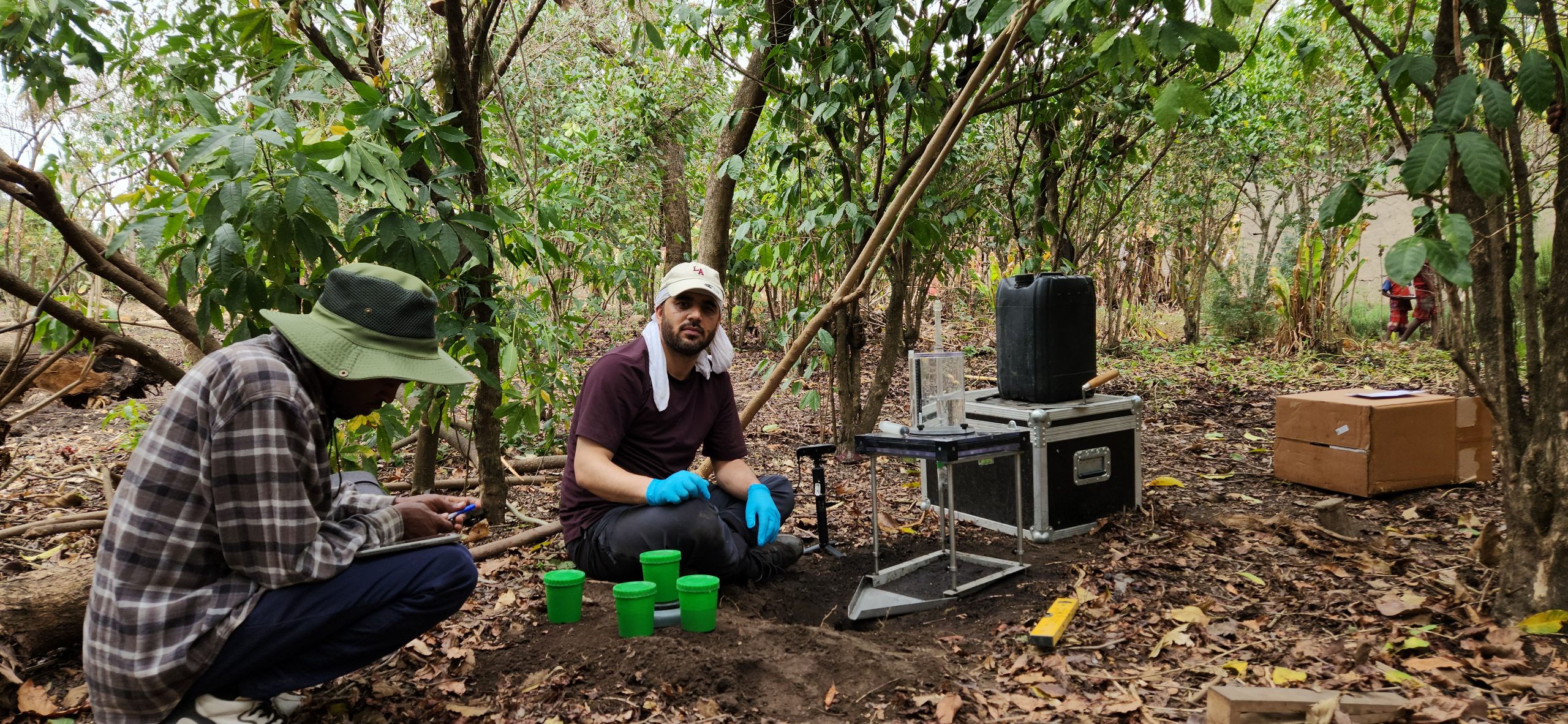
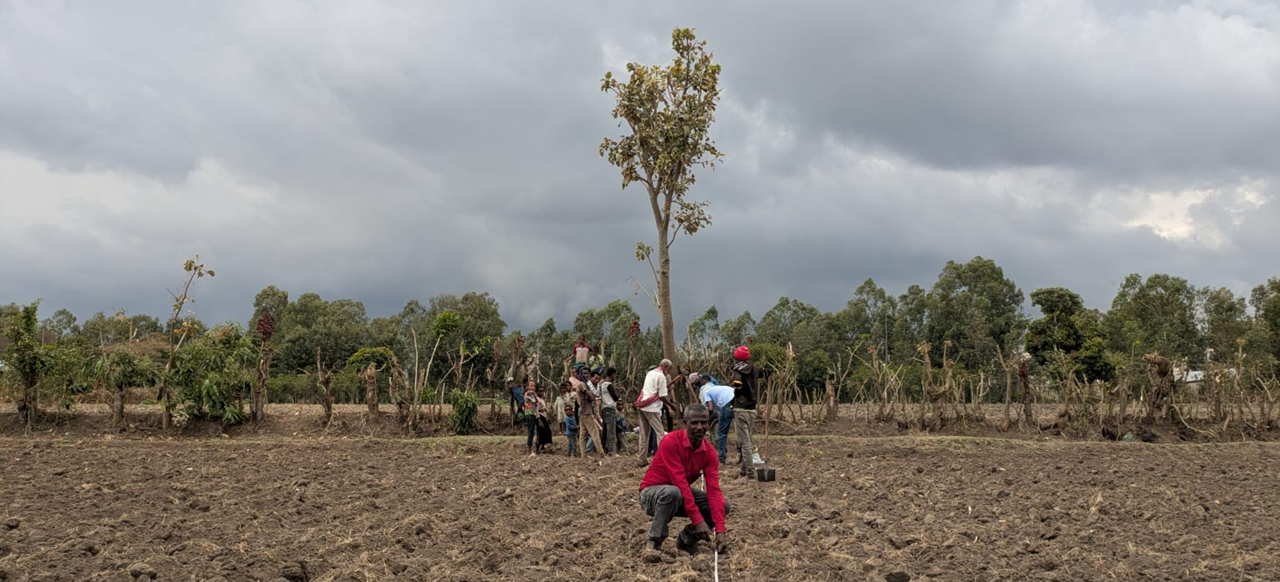
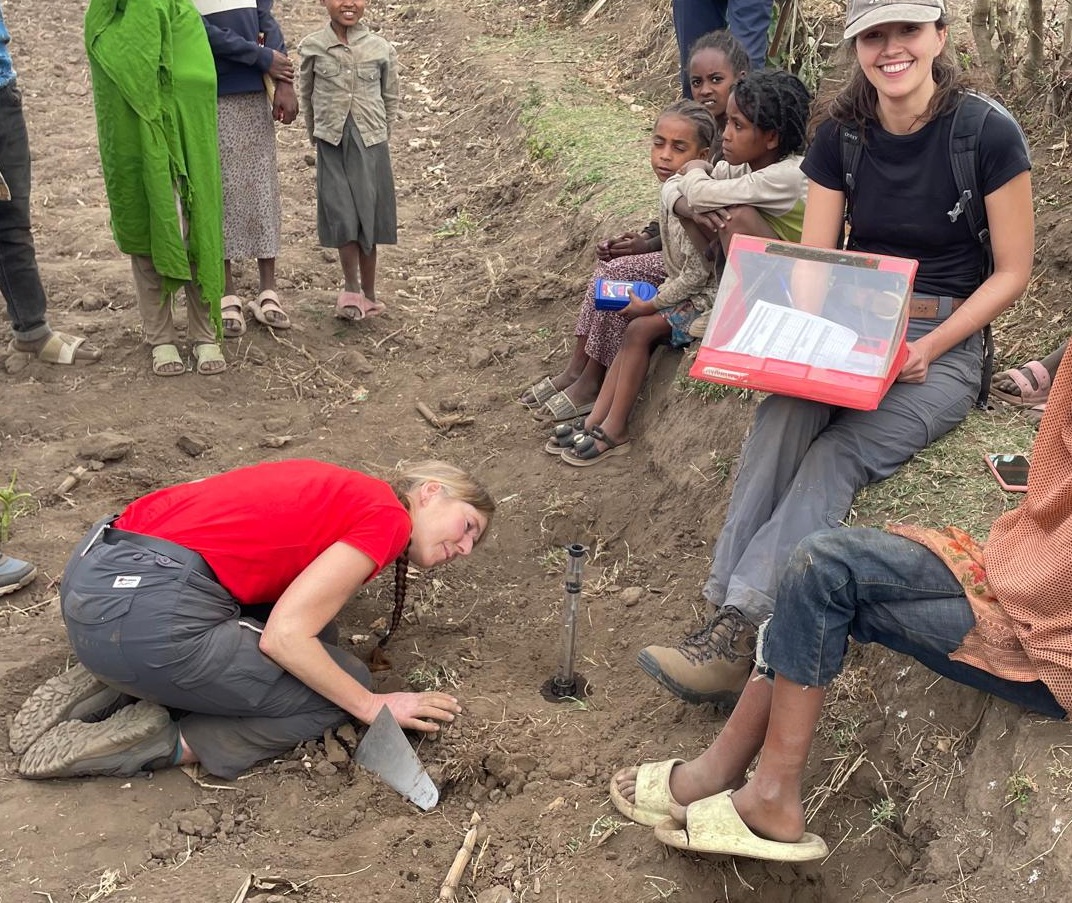
Images: 1. Characterising root structures back in the lab (credit: Beth Evans, UA) 2. Measuring erosion using a portable rainfall simulator (credit: Paul Hallett, UA) 3. Measuring distance from tree to take soil cores for further analysis (credit: Beth Evans, UA) 4. Measuring infiltration in the field (credit: Paul Hallett, UA).
Early Results Farmers Can See
While the laboratory results are still pending, simple field‑based soil health tests, designed for farmers and development workers (Assessing the impact of nature-based solutions on soil health in sub-Saharan Africa through farmer-centred methods) are already showing clear patterns. Using these tools, Dominik Bittner’s Team 5 compared soils from the most productive parts of farms (home gardens), the least productive parts (far‑fields), and the soils under the three under‑utilised species.
They found that soils beneath Korch, Wanza and Kerkeha had similar quality to soils in the most productive areas. This suggests that leaves from these species, especially the nitrogen‑fixing Korch, could be used to make vermicompost to improve poorer soils.
To help farmers understand these findings, the team devised and used an innovative communication method. Soil blocks were cut from different parts of the farm and placed side‑by‑side so that farmers could directly compare colour, structure, smell, root systems, the presence of soil organisms and underground biodiversity. The depth of penetration of the soil was assessed using a wire and the infiltration of water into the soil was measured using a food can with both ends removed.
These results were then represented beside each block using a stick for penetration and a bottle top for water infiltration. While farmers were watching, an aggregate from each area was dropped into a halved plastic bottle containing water so that they could compare how quickly the aggregates broke down.
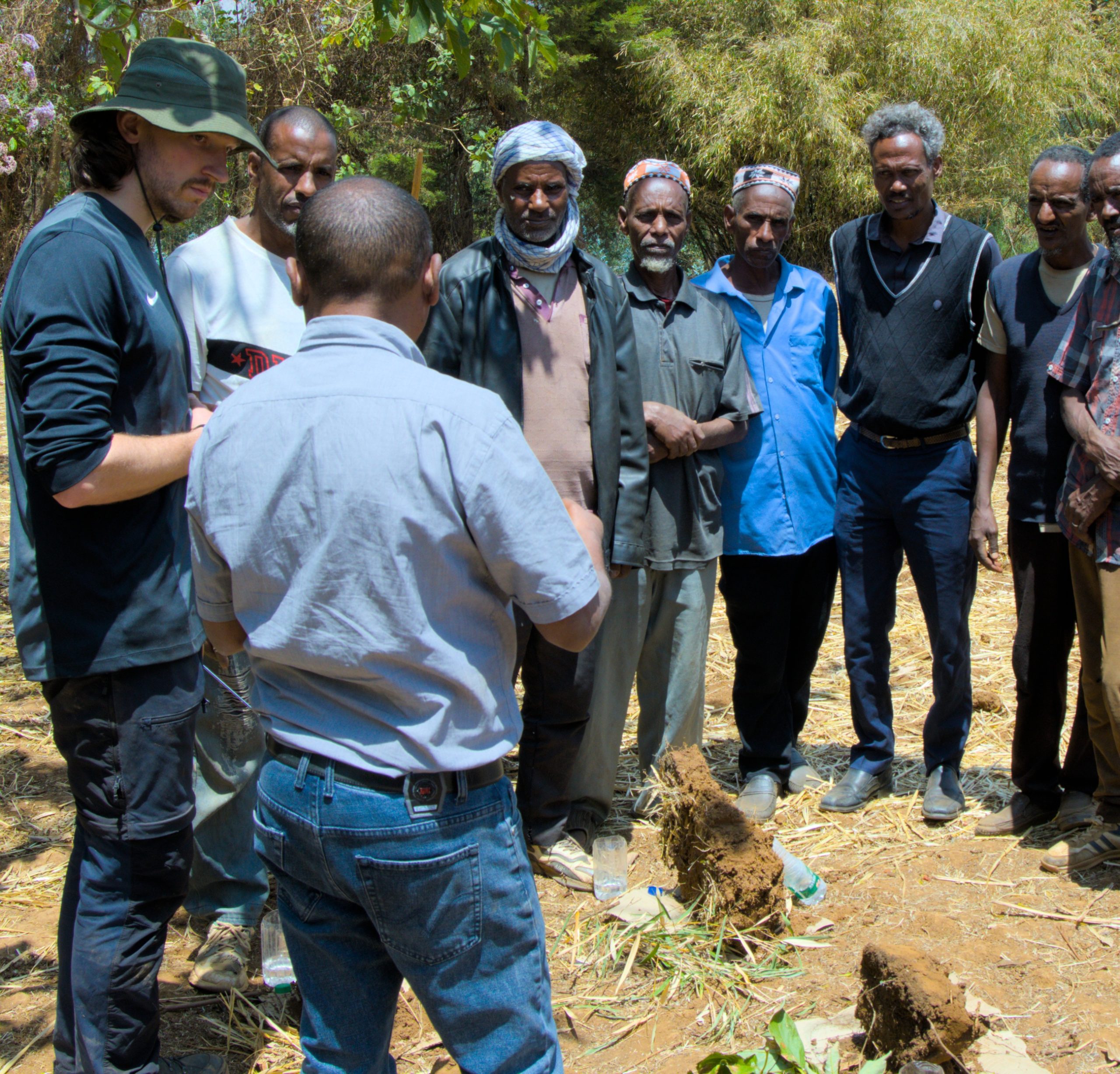
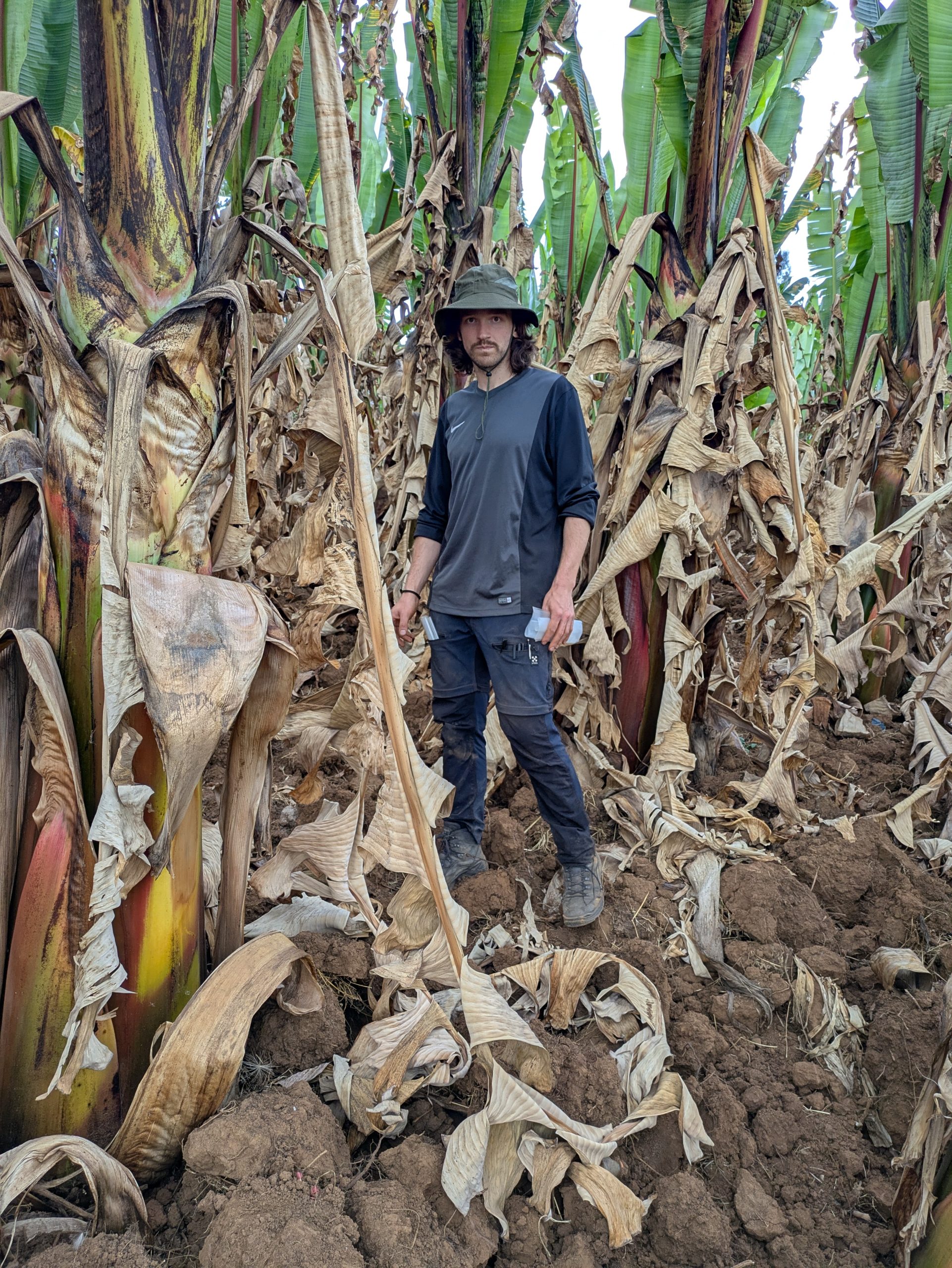
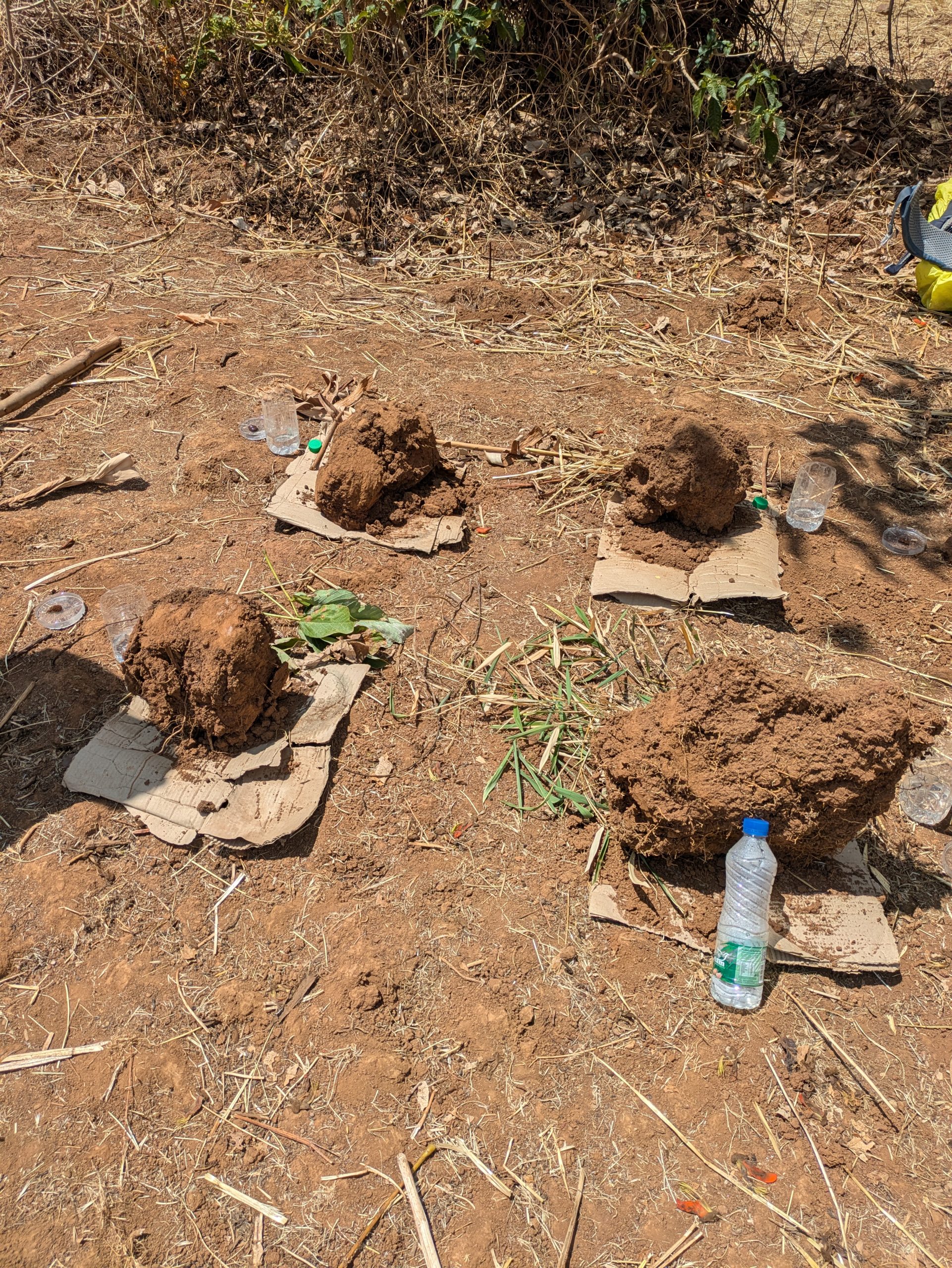
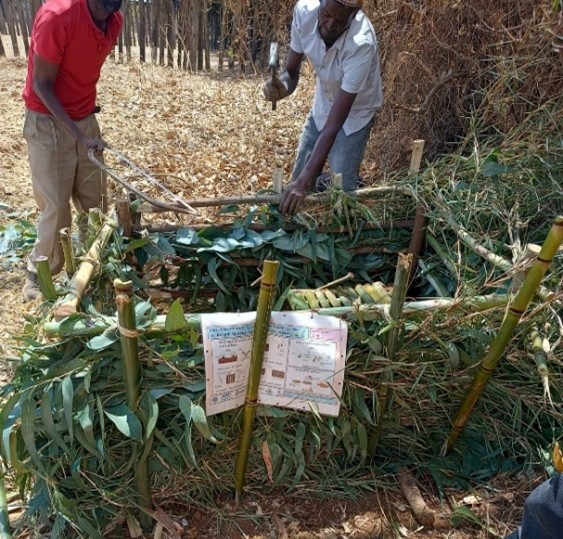
Images: 1. Communicating impacts on soil health to farmers (credit: Paul Hallett, UA) 2. The most productive area – the enset home-garden (credit: Paul Hallett, UA) 3. Soil blocks used to communicate soil health (credit: Paul Hallett, UA), 3. Building a mini-exclosure to hold biodiversity tests (credit: Grant Campbell, UA).
Communicating Biodiversity and Ecological Functions
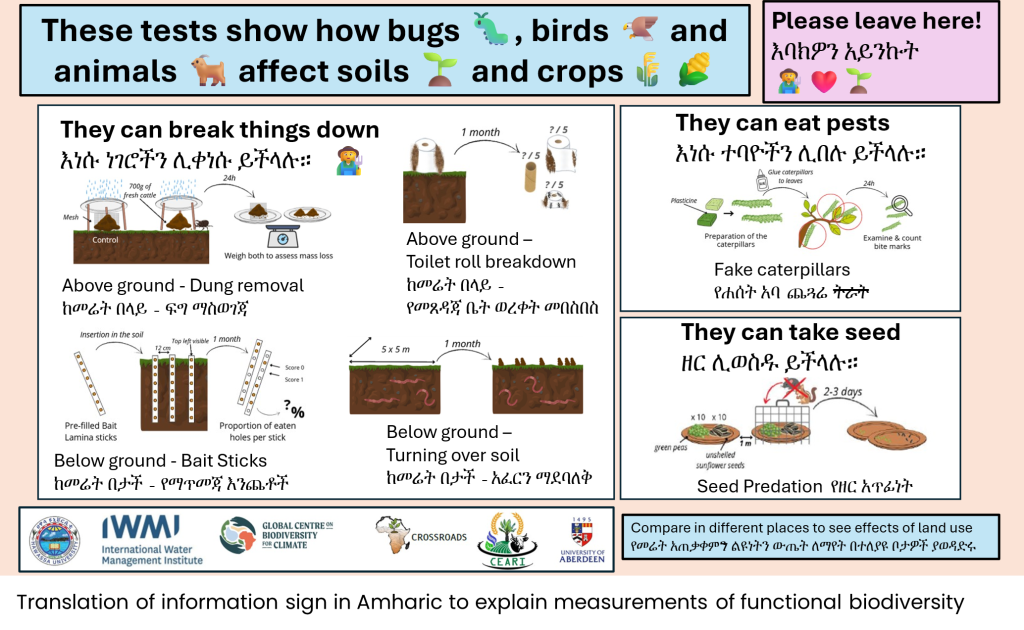
Grant Cambell’s Team 6 created “mini-exclosures” under each species using simple materials, such as dung, toilet rolls and plasticine caterpillars. These will stay on the farms for a few months to show how different plant species affect decomposition, pest activity and seed predation. A new method was also devised to allow local development agents to record results using photographs.
What Comes next?
More information about the effects of these under‑utilised plants on soil health will become available once laboratory analyses are complete, but already we have made significant progress in finding better ways to communicate soil health and biodiversity to farmers. This is an important step towards having a real-world impact on soil health and the productivity of farms in the region.
This report was prepared by Prof Jo Smith, University of Aberdeen.
For more information about the CROSSROADS-SSA project, please visit the project page