Environmental Pollution Programme: Working Together for a Pollution-Free Future for Nature, Climate and People

Pollution, biodiversity loss and climate change are described as the ‘Triple Threat’. Pollution is responsible for over nine million deaths annually90% occurring in ODA-eligible countries. The Environmental Pollution Programme works in partnership in Southeast Asia and Sub-Saharan Africa to mitigate, manage and reduce chemical, waste and air pollution.  

Challenge

Environmental pollution is a major driver of climate change, biodiversity loss and human ill health, particularly in low- and middle-income countries. Gaps in information regarding pollutant sources, pathways and impacts across air, chemical and waste pollution, alongside limited monitoring constrain the ability of governments to prioritise interventions, enforce policy and assess risks, especially where pollution sources are diffuse, rapidly changing or poorly characterised. 

In addition, there is a lack of accessible, context-specific evidence on effective and scalable alternatives to polluting practices. The programme therefore addresses the challenge of generating policy-relevant evidence and developing practical, locally appropriate solutions and policy recommendations that can reduce pollution exposure and support sustainable development.


Insight

The programme addresses these challenges through a systems-based approach that combines evidence generation, stakeholder engagement training and practical intervention. Across South Africa, Vietnam and Uganda, work has focused on improving understanding of pollution sources, pathways and impacts; developing and testing sustainable alternatives; building capacity through targeted training and awareness raising and strengthening monitoring to underpin robust decision making and policy. 

Co-developed interventions such as nature-based waste management solutions, integrated pest management and alternatives to open burning have demonstrated measurable reductions in pollution and improvements in livelihoods. The programme has also shown that accessible tools such as pollution models, hotspot mapping and decision-support frameworks can improve policy relevance when developed with end users. 

A key insight is that evidence alone is insufficient without effective translation and alignment with local priorities. Co-design with stakeholders, targeted training and awareness activities and sustained engagement with government and intermediary organisations have been essential for impact. This has been strengthened by governmental involvement in regional fora and development of a Health and Pollution Action Plan.  

Overall, the programme demonstrates that integrated approaches can simultaneously reduce pollution exposure, strengthen community resilience and support climate and biodiversity outcomes. 


Collaboration

The programme is delivered through a strong, multi-level partnership model involving government, academia, multilateral organisations and community stakeholders. Core delivery partners have included the Joint Nature Conservation Committee and the Global Alliance on Health and Pollution, working with in-country organisations, research institutions and civil society groups. 

Collaboration with national and local government bodies, including environmental agencies and research commissions, has been essential for aligning activities with policy priorities and supporting long-term uptake. Academic partners have contributed technical expertise, methodological development and independent evaluation, strengthening the credibility of outputs. 

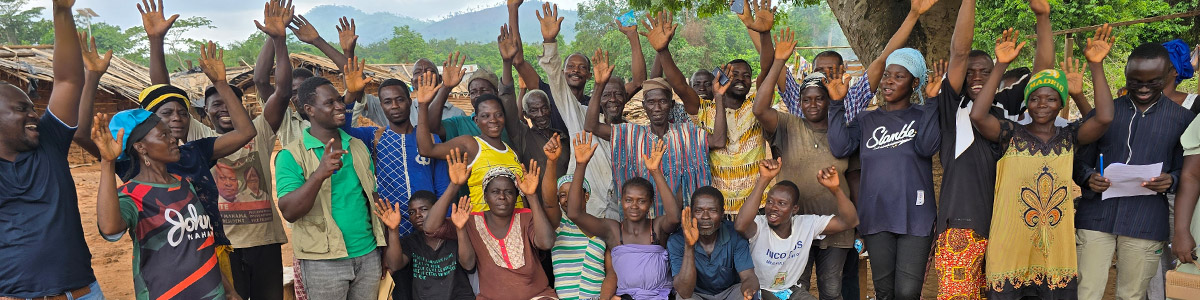
Community-based organisations and local stakeholders have played a central role in co-designing and implementing interventions, ensuring that solutions are context-specific and socially acceptable. Cross-programme engagement, including workshops, symposia and regional forums, has enabled knowledge exchange and the development of interdisciplinary networks. These partnerships have been critical to generating relevant evidence, supporting implementation and creating a foundation for sustained impact beyond the programme lifetime. 

Pollution does not stay where it originates. Contamination of food chains, water, soil, and air affects us all. The rise in diseases linked to environmental factors is a growing global concern.

Maria Paola Lia, Global Alliance on Health and Pollution


Impact

The programme has delivered measurable environmental, health and socio-economic impacts across partner countries. Interventions have contributed to reductions in pollution exposure through changes in practices such as waste management, integrated pest management and the reduction of open burning. These changes have been supported by increased awareness and capacity among communities and local institutions, leading to more sustainable behaviours and improved ownership of solutions. 

The programme has strengthened the evidence base for decision making, with outputs such as hotspot mapping, modelling and Health and Pollution Action Planning (HPAP) informing national and sub-national priorities. Engagement with government and intermediary organisations has supported the uptake of tools and approaches within planning processes, increasing the likelihood of sustained impact beyond the programme lifecycle. 

Impacts include improved livelihoods linked to more sustainable practices, and co-benefits for climate and biodiversity through integrated approaches. Overall, the programme demonstrates that combining evidence generation, capacity building and stakeholder engagement can deliver practical, scalable solutions with lasting benefits for human and environmental health.

Understanding What Works: Impact Evaluation for Conservation, Climate and Development

Countries: Global

Partners: International Initiative for Impact Evaluation (3ie)

Summary: Understanding the current state of knowledge on the effectiveness of interventions is the key first step in identifying critical evidence gaps which should be prioritised to support future conservation policy, decision-making and financial investment. Investing in impact evaluation aims to systematically identify, review and summarise existing evidence on what works for conservation, climate and development interventions, and to define a clear approach to address identified priority evidence gaps.

Activities

The project has focused on 2 main activities:

  • Updating an existing Evidence Gap Map (EGM) on Land Use Change and Forestry interventions. An EGM identifies and describes the evidence base measuring the effectiveness of programmes against different outcomes.
  • Producing a framework from which an EGM can be created for Climate Change and Biodiversity. In recent years, there has been an increase in the number of international frameworks to address the climate change and biodiversity crises that underpin the GCBC. Developing an evidence base on effective interventions to address these crises is critical, and 3ie have looked to develop an EGM framework that will act as the starting point for strategic and coordinated evidence generation and synthesis activities.


TIPAS: Realising the potential of plant bioresources as nature-based solutions in African biodiversity hotspots

Project Summary

Countries: Ethiopia, Guinea, Sierra Leone

Delivery Partner: Royal Botanic Gardens Kew

Principal Investigator:

James Borrell (Phase 2): Research Leader at Royal Botanic Gardens Kew

Carolina Tovar (Phase 2): Research Leader at Royal Botanic Gardens Kew  

Iain Darbyshire (Phase 1): Research Leader at Royal Botanic Gardens Kew      

Olwen Grace (Phase 1): Honorary Research Associate at Royal Botanic Gardens Kew

Contact:

James Borrell: J.Borrell@kew.org  

Carolina Tovar: c.tovar@kew.org  

Iain Darbyshire: I.Darbyshire@kew.org 

Olwen Grace: o.grace@kew.org

Challenge

More than 31,000 useful plant species have historically been documented to fulfil needs and services for humans, yet today in our food systems, we derive >50% of calories from just three crops, rice, wheat and maize. Sustainable exploitation of the diverse library of underutilized species and bioresources – including timber, medicines and valuable chemicals – represents an untapped opportunity to alleviate poverty, develop value chains, and tackle food insecurity, whilst being underpinned by nature conservation. These nature-based opportunities lie predominantly in tropical high-biodiversity countries and offer significant climate alleviation and biodiversity co-benefits. This project seeks to accelerate Kew’s efforts to identify and characterise high-value plant biodiversity hotspots, in three strategic tropical high-biodiversity countries, and pathways to develop bioresources within them. It aims to demonstrate both the economic and ecosystem service benefits of plant bioresources at both the local community and national level.

Related links: Supporting climate-resilient sustainable development in Africa | Kew

(DEEPEND) Deep-ocean resources and biodiscovery: enabling a sustainable and healthy low-carbon future

Project Summary

Countries: Various Pacific Small Island Developing States (PSIDS), Fiji, Cook Islands

Delivery Partner: Natural History Museum

Principal Investigator:

Adrian Glover: Lead the Deep-Sea Systematics and Ecology Group at the Natural History Museum (NHM), London

Contact:

Adrian Glover: A.Glover@nhm.ac.uk 

Challenge

The climate change crisis has increased the demand for natural resources, such as lithium, cobalt, and manganese, due to their role in the green energy transition as important components for batteries of electric vehicles. With vast reservoirs of minerals present in the deep sea, mining in our oceans is already being discussed and could start within the next decade, but little is known about the biodiversity and Marine Genetic Resources (MGR) present in these deep-sea regions. DEEPEND looks to develop a long-term project to understand the true value of biodiversity in deep-sea regions at risk from mining and climate change. It utilises molecular approaches to provide fundamental knowledge on biodiversity, explore pharmaceutical applications of deep-sea microbes and invertebrates, inform policy on seabed mining, deliver development outcomes, enable understanding of future climate scenarios and provide long-term research and development value.

Related links: DEEPEND: Deep-ocean resources and biodiscovery | Natural History Museum 

NTSP: Nature Transition Support Programme

Building on the Economics of Biodiversity: the Dasgupta Review, the programme aims to support countries to integrate nature into the decision-making processes of partner countries’ finance and planning ministries, through the development and adoption of country-specific actions across the whole of the economy.
Challenge

The global economy and human wellbeing are heavily dependent on nature, and the ecosystem services provided by nature stocks that underpin them. These include food production, clean water, pollination, climate regulation, and biodiversity. Recent analysis shows that over half of the world’s GDP, equivalent to approximately $58 trillion, is either moderately or highly dependent on nature and its services.

Despite its fundamental role, natural capital has been heavily depleted, as has the biodiversity that underpins it, in favour of human and produced capital. It is widely recognised that the failure to address environmental degradation and the depletion of natural capital result from historic institutional and governance failures that prevent us from taking full account of the economic value of nature.

Fundamental and systemic reforms are needed to tilt financial incentives away from nature’s destruction towards its protection and restoration, but more effort is needed to champion them in boardrooms and finance ministries.


Insight

To address this, the Nature Transition Support Programme aims to make a compelling case for a transition to a development model where development reflects the reality that we i.e. economies, society, are embedded in Nature; not external to it. By engaging directly with finance and planning ministries, the NTSP supports partner countries to understand the interactions of natural capital and their economies, and the implications of current economic development paths for nature and economic development.

This includes the development of scenarios that identify alternative nature-positive development pathways which embed economies in nature i.e. where development preserves and enhances natural capital and the wealth and health of future generations, while supporting efforts to tackle climate change.  

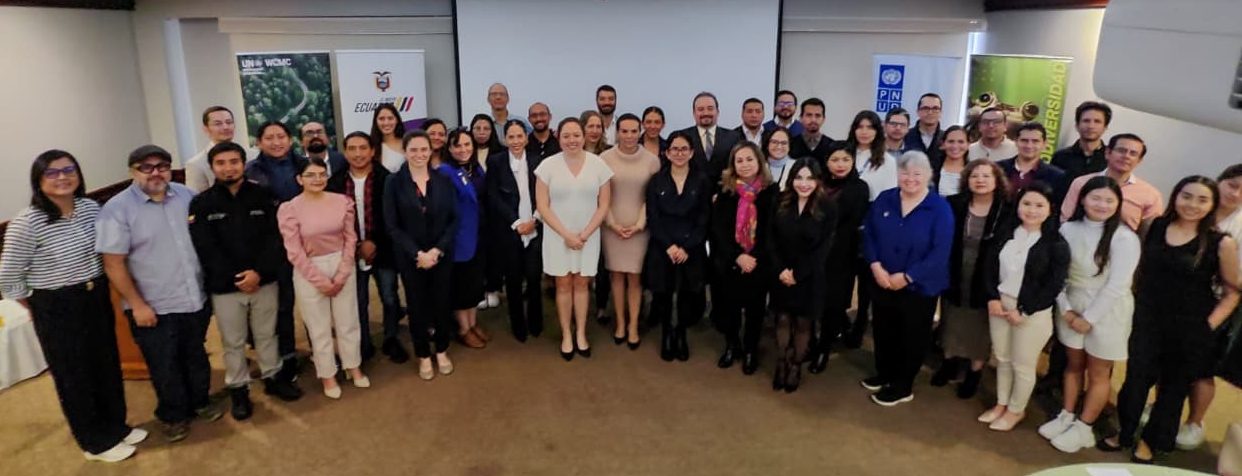
NTSP brings together partner country expertise and political leadership with international research partners and policy makers.Analysis carried out by the programme ascertained that in Ecuador 34% of GDP is generated by sectors with moderate to very high direct dependence on nature, and this rises to 48% in Colombia and 60% in Ghana. Such dependency is not limited to traditionally nature-reliant sectors such as agriculture, and extends to other key economic areas, such as manufacturing. This information now features prominently in some of the country’s key policy documents and strategies.


Collaboration

The project brings together expertise from the Alexander von Humboldt Biological Resources Research Institute, the Instituto Nacional de Biodiversidad (INABIO), the United Nations Development Programme (UNDP), the University of Minnesota, the Council for Scientific and Industrial Research (CSIR) and the Centre for Biodiversity Conservation Research (CBCR).
Transparency and Traceability of Forest Risk Commodities

Project Summary

Countries: Global

Principal Investigator:

Laura Vary: Director of Partnerships, Global Nature Watch, WRI

Ashleigh Zosel Harper: Associate – Strategy, Monitoring, Evaluation and Learning, WRI

Contact:

Laura Vary: laura.vary@wri.org
Ashleigh Zosel Harper: ashleigh.zoselharper@wri.org

Challenge


The Traceability and Transparency (T&T) research project forms a UK contribution towards the international dialogue on the traceability and transparency of supply chains of internationally traded agricultural commodities including supporting discussions in the Forest, Agriculture and Commodity Trade (FACT) Dialogue. During its COP26 Presidency the UK launched the FACT Dialogue, with Indonesia as co-chair. The government-to-government Dialogue brings together the 28 of the largest producers and consumers of Forest Risk Commodities (FRCs), such as palm oil, soya, beef, cocoa and timber, to protect forests and other ecosystems while promoting sustainable trade and development and addressing the climate and biodiversity crises. The T&T research report aims to support growing an understanding of the state of global traceability and transparency systems in order to provide key stakeholders with the understanding they need to promote and guide positive change for people and forests. The T&T project provides a synthesis of the state-of-play regarding T&T of FRCs to enable a more comprehensive and data-driven response that stakeholders from both the FACT Dialogue and the international community can use to make evidence-based decisions in pursuit of our shared goals.

Related links: Traceability and Transparency in Supply Chains for Agricultural and Forest Commodities | World Resources Institute

Central and Eastern European Conflict Timber project

Countries: Main timber sample collection areas: Ukraine and Belarus; Additional timber samples also collected from: Finland, Estonia, Latvia, Lithuania, Slovakia, Hungary, Romania, Croatia and Moldova.

Partners: World Forest ID (WFID), Royal Botanic Gardens Kew

Summary: In light of the Russian invasion of Ukraine, and the opportunity for Russia to finance the war or subsequent occupation through sales of timber, the Central and Eastern European Conflict Timber project seeks to build on existing voluntary measures, punitive tariffs and sanctions on the direct import of timber to make it harder for Russia to circumvent these measures. Specifically, this project is designed to support the widespread use of scientific testing techniques to scrutinize claims about the origin of timber from this region. Current reference libraries lack samples of key species which grow in Russia but also throughout Ukraine and neighbouring countries. This project therefore aims to build up a georeferenced database of timber samples so products in trade can be tested against this reference data to validate the species and location of harvest.

SABIOMA: Safeguarding Biodiversity and Climate Resilience

Country: Argentina

Partners: UK: UK Centre of Ecology & Hydrology; Argentina: University of Buenos Aires, The National University of Córdoba, The National University of Tucuman, The Catholic University of Salta

Summary: SABIOMA looks to develop integrative solutions to design nature-based solutions that promote biodiversity, increase resilience to climate change and contribute to sustainable livelihoods in Argentina’s agro-ecosystems.

Related links: SABIOMA

KELPER2: Impacts of Kelp Harvesting for Marine Biodiversity and Ecosystem Services

Countries: Argentina, Chile, Peru

Partners: UK: Newcastle University, Marine Biological Association, Scottish Association for Marine Science; Latin America: IMARPE (Peru), IBIOMAR (Argentina), Catholic University of Chile (Chile)

Summary: Wild kelp harvesting is an important industry in Latin American countries, especially in Chile and Peru, with over 40% of global brown algal landings originating from these two countries and where over 13,000 people are directly employed by the industry. With previous work showing that poorly managed kelp harvesting alters the structure and formation of kelp forests, KELPER2 aims to explore the drivers that reduce the resilience of kelp forests and their blue carbon potential to different sustainable harvesting regimes.

CONTAIN: Optimising the long-term management of invasive species affecting biodiversity and the rural economy using adaptive management

Countries: Argentina, Brazil, Chile

Partners: UK: University of Aberdeen, Queen’s University Belfast; Latin America: Unesp (São Paulo State University, Brazil), CONICET (Argentina), Centro de Humedales Río Cruces (Chile), Agricultural and Livestock Service – SAG (Chile)

Summary: The CONTAIN project works across the Latin America region with the aim of realising the multiple environmental, social, and economic benefits and co-benefits of managing Invasive Alien Species (IAS) in a cost-effective manner. The project’s objectives are to:

  • Move from efficacy to efficiency when evaluating IAS management, by considering wider costs and benefits associated with each management action, such as those that scale up with the number of invaders and costs associated with ecosystem services changes brought about by IAS.
  • Rigorously evaluate empirically and through modeling under what circumstances invasive trees deliver valuable carbon sequestration ecosystem service that could be traded-off against the loss of carbon above and below ground, by native plant communities, loss of biodiversity, and ecosystem service and resilience. Hence informing a lively ongoing debate on the pros and cons of carbon sequestration by invasive trees, a potential nature-based solution.
  • Evaluate how incentives, compensation for the loss of income, and sources of income may contribute to the sustainability of participatory control of IAS for rural communities so heavily affected by IAS that their livelihoods are in peril.