Evaluating Blue Carbon Strategies for Protecting Wild Seaweeds

New ways of financing international efforts to protect and restore threatened seaweeds could help safeguard the wider natural environment, according to an environmental economist at the Scottish Association for Marine Science (SAMS).

Dr Niko Howai, has joined the GlobalSeaweed-SUPERSTAR team to evaluate how various mechanisms of so-called ‘blue finance’ can be applied to seaweed protection and restoration, particularly in tropical regions of the world.

Threats such as global climate change, overharvesting, pollution and an increase in invasive non-native species, could result in dramatic changes in distribution and diversity of seaweed species. These would not only negatively affect the natural environment and wild seaweed stocks but also threaten the livelihoods of millions of seaweed farmers that rely on a healthy environment to grow their crops and the wild cultivars for future climate-resilient varieties.

However, Dr Howai believes evaluating the blue finance options available to protect and restore seaweed across potentially conflicting and multi-faceted decisions, may help to safeguard their future.

There is currently a huge shortfall in the finance required to support seaweed protection and restoration initiatives, which are totally absent in many countries worldwide. If we are looking at the safeguarding the seaweed farming industry, we need a mechanism of financial incentive to help protect and restore wild seaweed populations. It is not enough to look only at things like a farmer’s access to credit; we must also consider the health of the environment in which they work and how this all fits in with the UN Sustainable Development Goals.

Dr Niko Howai, Scottish Association for Marine Sciences


Blue Finance Mechanisms

With an initial focus on South-east Asia, Dr Howai will investigate four possible blue finance mechanisms for the seaweed protection and restoration: blue bonds, blue carbon credits, debt for nature swaps and blended finance.

He will assess the effectiveness of each mechanism by applying five evaluation criteria: environmental and ocean protection, community benefits and social inclusion, financial strength and viability, governance and transparency, and policy alignment and innovation.

By interviewing experts in finance, he will score each mechanism and recommend them most effective method to help sustain seaweed protection and restoration and to protect the wider environment.

GlobalSeaweed-SUPERSTAR, which is funded by the Global Centre on Biodiversity for Climate and led by SAMS, recently published The State of the World’s Seaweeds report, which combines the most up-to-date scientific evidence on the threats facing global seaweed habitats.

The report emphasises that despite the importance of seaweeds, and the severity of the threats they face, they are afforded inadequate conservation measures. Authors of the report have called for these major gaps to be addressed.


If we can identify a mechanism of blue finance that is effective on environmental protection, societal inclusion, financial strength, governance and policy alignment, it could go some way to improving the protection and restoration of threatened seaweeds, whilst securing a sustainable future for the seaweed farming industry.

Prof. Elizabeth Cottier Cook, Principal Investigator, GlobalSeaweed-SUPERSTAR


For further details on the GlobalSeaweed‑SUPERSTAR project and its partners, please visit the project page.

Enhancing Coastal Ecosystem Services: ENHANCES Explores Solutions through Games


Children play games to learn about the world. Games help us explore our environment, develop our social skills, and understand how to address complicated challenges. They offer a powerful tool that engages individuals to think differently about complex problems and provide psychological safety for experimentation. Gamification, the use of games and game elements in a context beyond entertainment, has the potential to facilitate cooperation and knowledge sharing around convoluted and sometimes contentious issues.

One particularly complex challenge facing tropical coastal regions is coastal erosion and flooding. In Suriname, the effects of this problem are particularly potent. With climate change threatening both rising seas and unpredictable storms, protection of Suriname’s coastline and the 85% of Suriname’s population that lives in this region is critical. The country’s mangrove green belt has historically provided protection to this coastal region, but environmental factors and human land use have weakened these ecosystems and the protection they provide.

While a major focus of the GCBC funded ENHANCES project is collecting environmental data from coastal Suriname to better understand mangrove ecosystems as a nature-based solution for flood protection, gaining insight into what is happening and why is only part of the challenge. Developing effective approaches to reduce erosion and flooding requires consensus and collaboration from stakeholders in the country. However, limited resources and differing views on the best strategies make this process particularly challenging.

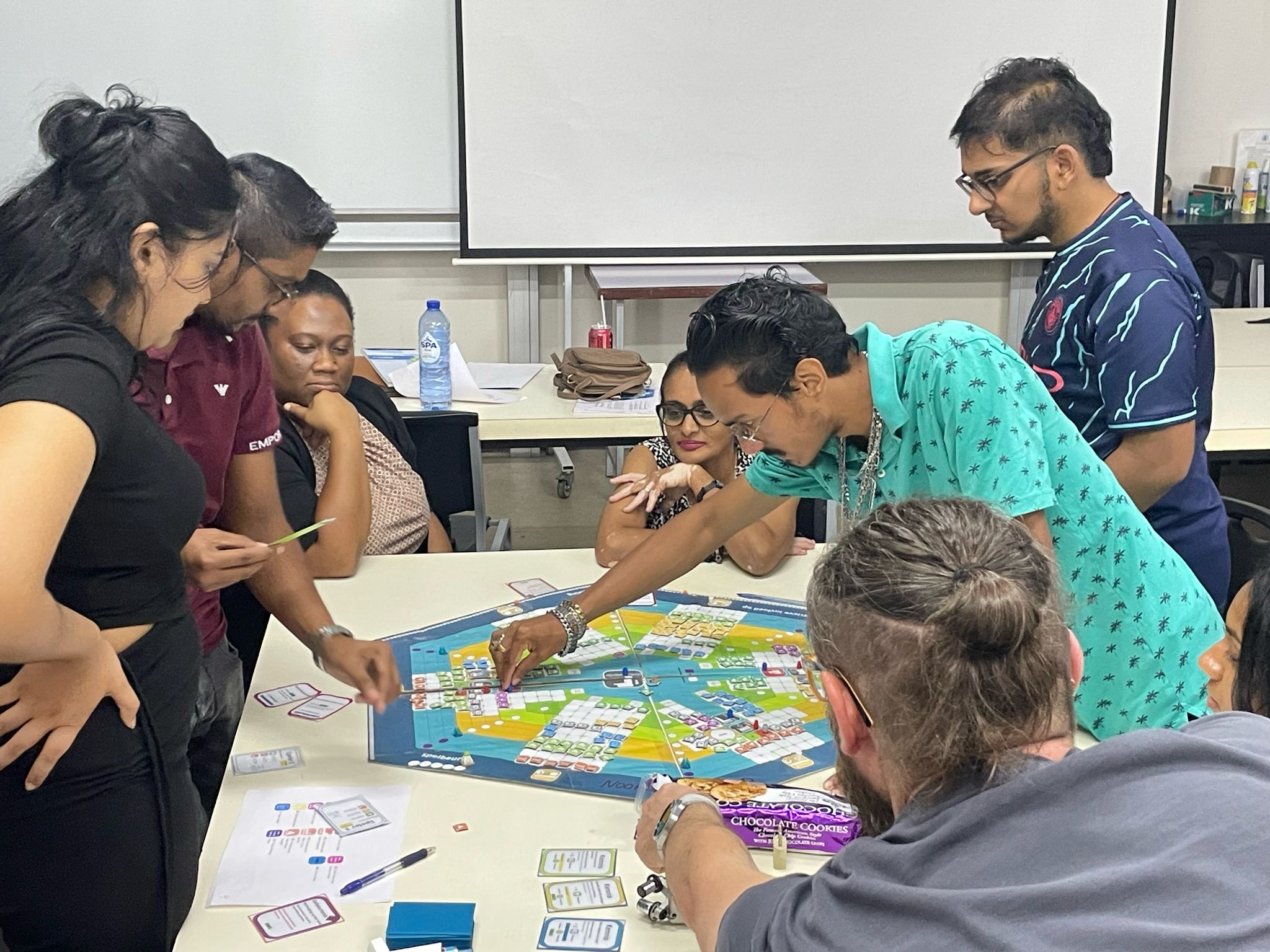
To support dialogue and knowledge sharing around this issue, ENHANCES is developing an interactive boardgame. The game aims to foster constructive conversations among stakeholders.


Resilient Coast: The Game

The development of this game began with a clear goal: building consensus. The design team set out to create a space where dialogue among stakeholders with diverse, and often competing interests, could take place. The design team is led by Dr. Agnessa Spanellis, Senior Lecturer in Systems Thinking and Dr. Sandy Louchart, Research Associate in Game Design, at the University of Edinburgh, working closely with the Anton de Kom University of Suriname, particularly Dr. Fariel Ishaak and Graciella Hunte from the Faculty of Social Science and Prof. Sieuwnath Naipal (Faculty of Technological Sciences), and supported by the whole multi-disciplinary ENHANCES team, led by Dr. Isabella Bovolo from the Department of Geography at Durham University.

The game is seen as a first step toward consensus building on coastal flood mitigation, offering participants an opportunity to reflect on the issue. To do so, it must establish a baseline of knowledge about tropical coastal protection. This baseline combines factual insights from scientific literature and experts (within the ENHANCES team and elsewhere) with the perspectives and opinions of stakeholders in Suriname and the region. From this foundation, three broad questions emerge about the role of mangrove ecosystems in mitigating coastal flooding:

  • What information is relevant to players?
  • What is currently known and supported by scientific evidence?
  • What do experts believe should be done?

In May 2023, interviews were arranged with local stakeholders and insights from these conversations helped identify the core requirements for the game.


It was very enriching to understand experiences of different people on the ground and see what they are doing to cope with the floods. Some of them said that nobody has asked them about their experiences before.

Dr. Agnessa Spanellis, Senior Lecturer in Systems Thinking, University of Edinburgh

These insights, together with scientific evidence on coastal processes, were brought together in a causal map—a tool that visualizes the actions and consequences within a complex system to help identify key information, elements, and processes. The map was cross-referenced with project experts to clarify existing knowledge and identify gaps related to coastal flooding in Suriname

From this data, the first prototype of the game was born. Priority learning outcomes were established first, and game mechanics followed based on these initial aims. Some knowledge could be shared with the players simply and directly. The more complex concepts, however, are better communicated through experience and observation (constructivist learning). These experiential loops would develop into game mechanics, driving the game and engaging the players in problem solving.


What does the game look like now?

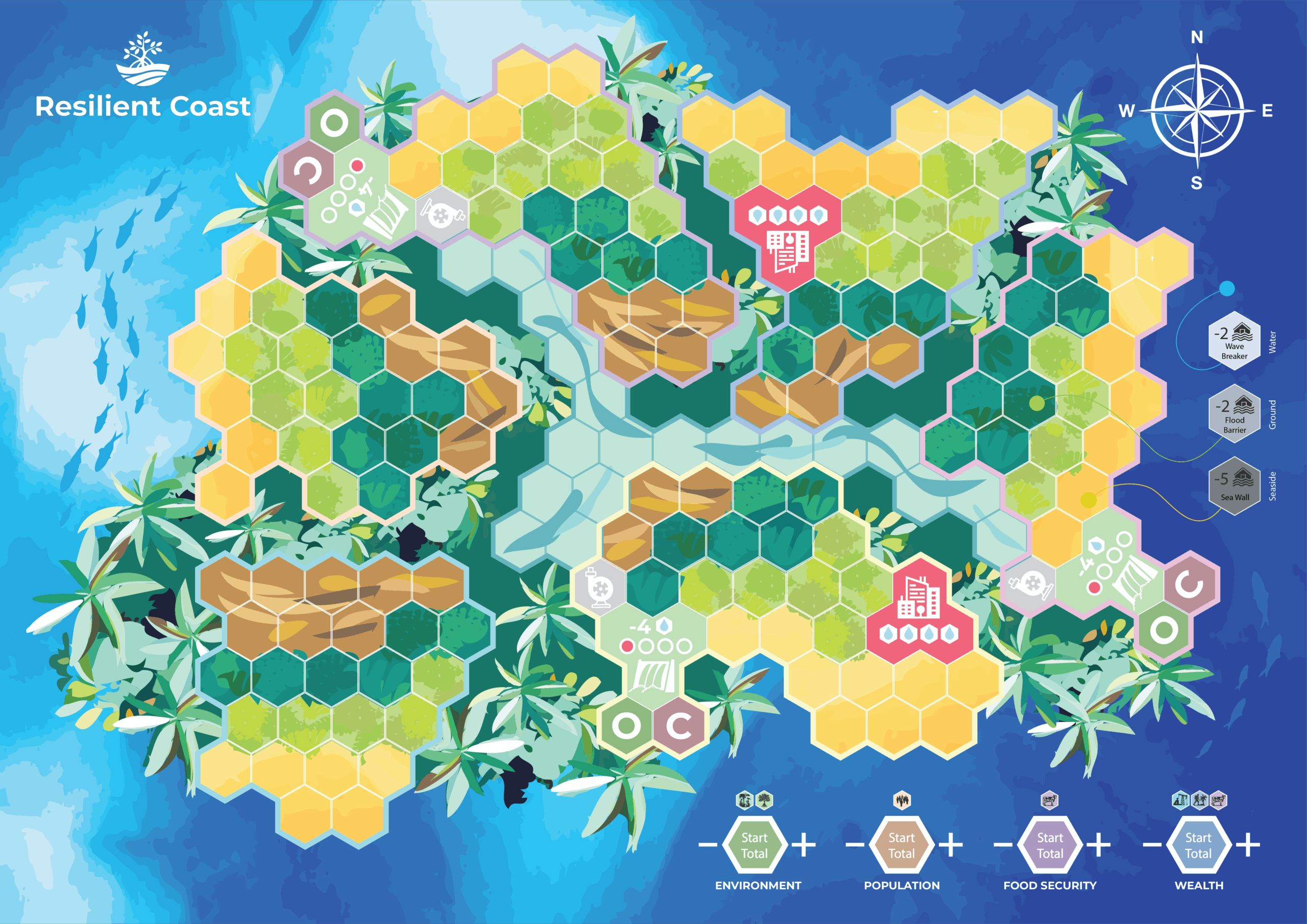
Six players work cooperatively to protect a mass of land from increasingly devastating flooding events. The land includes six zones, and within each zone are tiles that correspond to agriculture, businesses and industry, population centres, and natural features, including mangrove forests along the coast. The players assume specific roles, each with certain capabilities and skills that might prove useful. The goal is to work together, pooling resources and skillsets, to protect the land from flooding while growing the country’s economy, and population.

Since the first prototype, the game has seen many different forms. Each new version has been informed by the previous versions in an iterative and logical process. In March 2025, Sandy facilitated the initial gameplay testing with two groups of players from various locations along the Suriname coast and from varying backgrounds.

Meeting the communities involved and testing the game in situ has allowed me to observe player interaction and communications and better understand group dynamics.

Dr. Sandy Louchart, Research Associate in Game Design, University of Edinburgh

The playtests generated valuable insights that enabled further refinement of the gameplay. The final version of the boardgame is expected to be completed by early autumn 2025 and rolled out in Suriname in early 2026.

To find out more about ENHANCES, please visit www.enahncesproject.org, or contact the project Principle Investigator, Dr Isabella Bovolo, Durham University.


Blog kindly prepared by Dr Zane Havens, Outreach and Dissemination PDRA, Heriot Watt University, UK

This work has been generated by the ENHANCES (ENHANCing Coastal Ecosystem Services) research project, with funding from DEFRA -Global Centre on Biodiversity for Climate (GCBC), project GCBC RGC1 G01-007511, and shared contribution and responsibilities of Durham University (project lead), Edinburgh University and Heriot-Watt University in the UK and the Anton de Kom University in Surinam (local lead).


Image Caption: During a gameplay test with students from Anton de Kom Universiteit van Suriname, the ENHANCES team gained valuable insights into how the game’s mechanics engaged players and the types of conversations that emerged during play. Participants in this session included Suraja Premchand, Hussain Zalikha, Yashwier Sewdajal, Roel Kalpoe, Naipal Sumintra, Millerson Janvier, and Chaotlian Winay. The game facilitators shown are Sandy Louchart, Fariel Ishaak, Graciella Hunte, and Tom Wagner. Video recorded by Zane Havens.
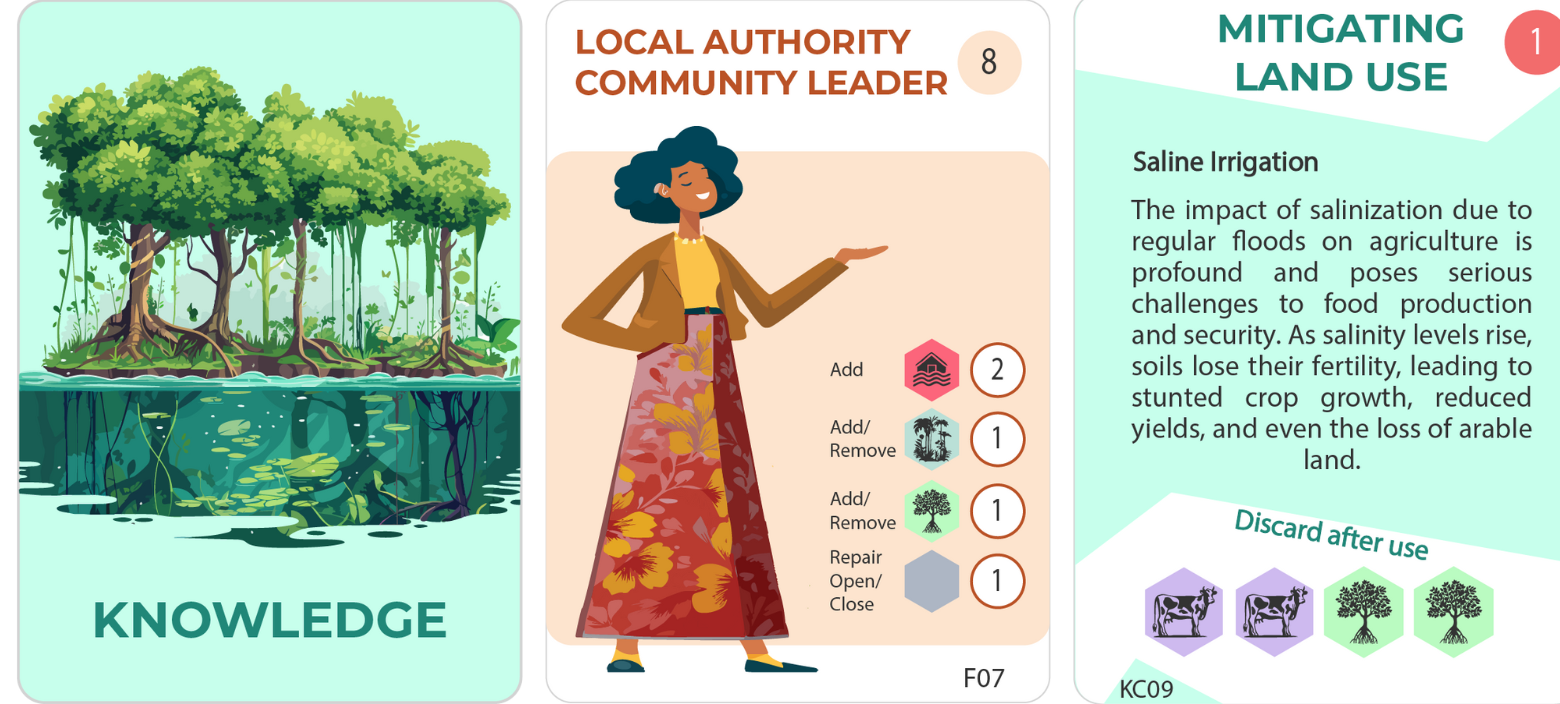
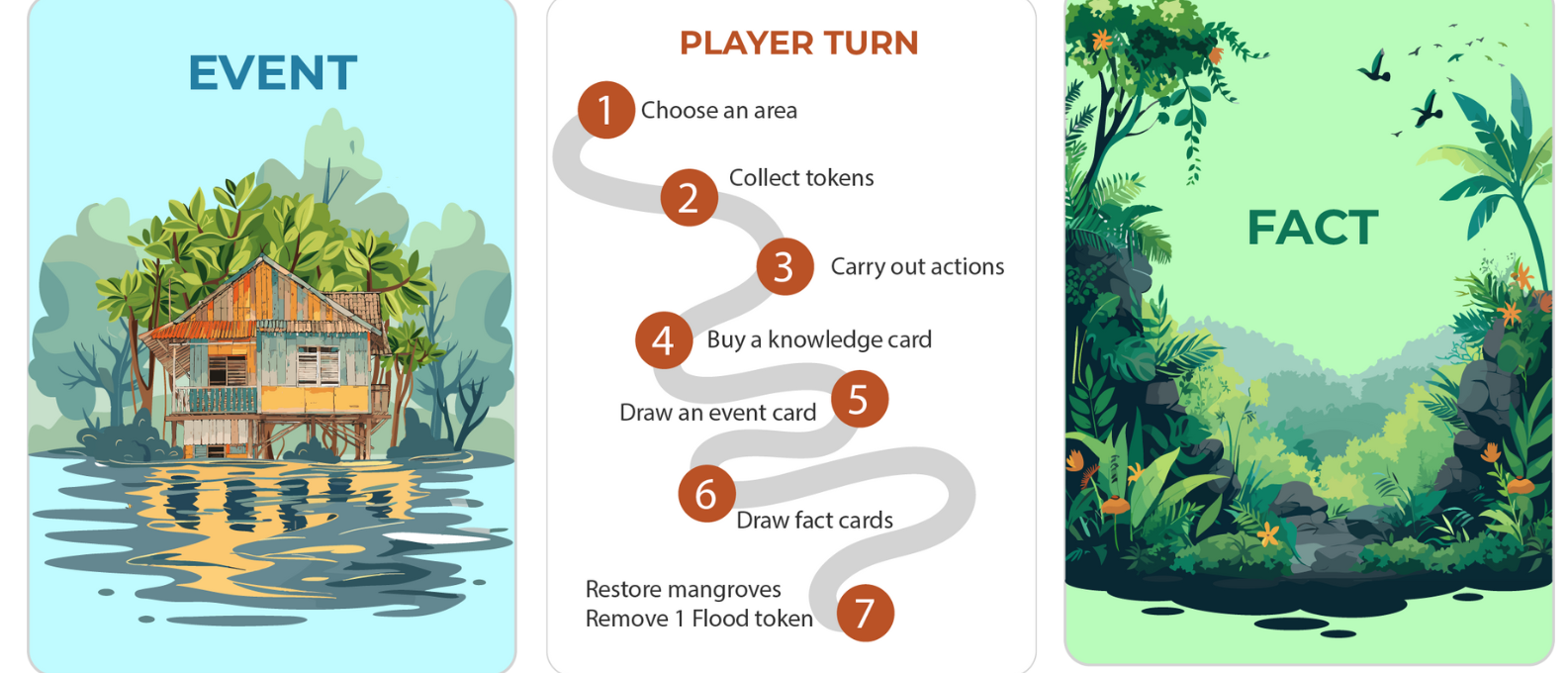
Game Design Images Caption: The final version of the game will feature a variety of cards designed to advance gameplay and enhance players’ scientific knowledge. It will also include a game board printed on fabric, making it durable, portable, and water-resistant. Images provided by Sandy Louchart.

GlobalSeaweed SUPERSTAR: Developing new innovative cultivation methods for testing wild eucheumatoids for their climate resilience

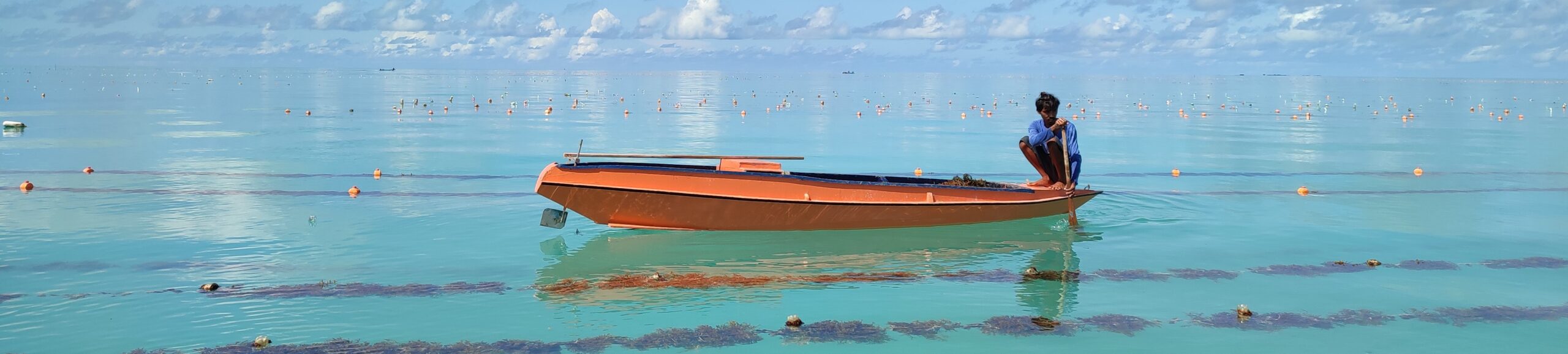
A research team from the University of Malaya, Malaysia, is developing climate-resilient seaweed strains in Semporna, Sabah under the GCBC-funded GlobalSeaweed SUPERSTAR project.

Eucheumatoids – a group of red seaweed species – account for over 90% of global production of carrageenan, a product widely used as a gelling, binding and thickening agent in various industries including food, pharmaceuticals and cosmetics. Euchematoid output has declined in recent years due to the low genetic diversity of aging cultivars. This challenge is further intensified by climate change, which has led to a rise in pests and diseases.

The research aims to address this issue by developing new strains resistant to climate change, pests, and diseases. Wild eucheumatoids were collected from the Semporna waters (Sabah Province, north-east Borneo), under permission granted by the Sabah Biodiversity Centre. Specimens were hand-picked during snorkeling, selecting only large, healthy individuals.

As the size and morphology of the wild-collected eucheumatoids were smaller and less bushy compared to the commercial ones, the longline cultivation method, commonly used in commercial seaweed farming was not suitable for their on-growing. An innovative new net system therefore had to be developed as an alternative to the longline.

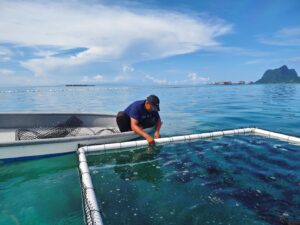
The new system was found to work most effectively based on a two-stage approach. Firstly, the newly collected eucheumatoids were on-grown in basket nets with a relatively small mesh size to prevent grazing by herbivorous fish and turtles. This was then followed after 40 days by a larger cage net system, which allowed greater water circulation, around the eucheumatoids once they had grown in size, but again deterred the grazers.

Transferring seedlings from basket net to cage net system (Pic: Nurulafifah Yahya)

The new two-stage netting system has successfully enabled not only the survival of wild-collected eucheumatoids, but their increase in size compared with the longline method. The growth rate of the wild-collected eucheumatoids is also comparable to commercially cultivated species, reaching a rate of 3.03 % day-1 when cultivated in the cage net over the typical 45-day cultivation period.

One downside of the system is that it does require frequent cleaning and maintenance, due to the netting becoming covered with biofouling which reduces the water flow. On the plus side, however, this new cultivation system has been so successful that the research team have now donated over 150 kg of wild-collected eucheumatoid seedlings to a local seaweed company for them to on-grow at their farm.

The farmers are also extremely interested in the larger cage design and the research team are working closely with the local stakeholders to further expand this innovative research in Malaysia.

Blog: Balancing conservation and livelihoods – exploring local perspectives within the Indonesian seaweed industry

By Shaun Beattie, Early Career Researcher, GlobalSeaweed SUPERSTAR

Indonesia is the world’s second-largest seaweed producer, and for more than 267,000 farming households, it’s more than just an industry – it’s a way of life. Nowhere is this more evident than in South Sulawesi, Indonesia’s largest seaweed-producing area, where vast coastal communities depend on seaweed farming for their livelihoods.

With low cultivation costs, short production cycles and minimal labour requirements, red seaweeds such as Kappapycus spp. and Eucheuma spp. have become extremely popular exports in the region. As global demand for seaweed-derived ingredients, such as carrageenan and agar continue to grow, Indonesian seaweed exports are set to rise. However, sustainable and lasting seaweed cultivation depends on healthy marine ecosystems and biodiversity-rich habitats, including those created by seaweeds themselves. Balancing conservation efforts with the industry’s rapid expansion presents a growing challenge, as this push for greater seaweed production risks putting pressure on these vital environments.

Recently, I – along with Cicilia Kambey (University of Malaya) – have been in Makassar, South Sulawesi, as part of the GCBC funded Global SeaweedSUPERSTAR project. Our goal? To explore local perspectives on the ecological and community value of seaweeds and uncover the key barriers impacting its sustainable management.

Insights and Generous Hospitality

Our goal was ambitious: to speak with and interview 100 local stakeholders, including seaweed farmers, manufacturers, aquaculture organizations, industry professionals, government officials, academic institutions, and NGOs.

As a result, these three weeks absolutely flew by as we met a number of great people, sharing conversations and insights on the current state and future of Indonesia’s seaweed industry.

What really stood out was the overwhelming support we received. Everyone we met was eager to contribute, generously sharing their time and thoughts. We were welcomed with incredible kindness, along with a nice cup of tea or coffee, as we discussed the aims of our research. On occasion, we were even treated to some incredible seaweed-based snacks and beauty products from fantastic independent business owners!

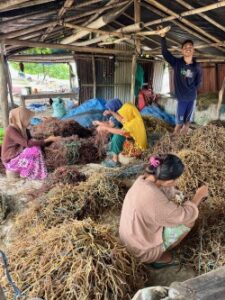
The seaweed farming communities were also eager to share their knowledge and showcase their daily routines. As we toured their farms, we often arrived to find groups of (mostly) women carefully tying individual seaweed seedlings to long lines before transporting them out to sea for cultivation. It was fascinating to see just how fast they could tie each seedling to the line at perfect intervals.

Economic Stability vs the Call for Conservation

It quickly became clear that many farmers understood the important ecological role that seaweeds played in marine ecosystems. They frequently mentioned how seaweed supports local fish stocks and acts as a nursery for juvenile fish. However, this awareness was often followed by a candid admission: that the protection of natural seaweed stocks was largely overlooked because they held little to no economic value. With the price of seaweeds fluctuating significantly in recent years, farmers were predominantly focused on securing sustainable incomes from cultivated seaweed. As a result, the protection of cultivated seaweeds was considered important, but the conservation for natural seaweed stocks was often an afterthought.

The mood for economic assurance was echoed by many of the other stakeholders we spoke with. Local NGO groups and government officials in the Department of Fisheries strongly emphasised the need for international investment to support the expansion and sustainable management of the seaweed industry. Without incentives or clear guidance, it was feared conservation would remain a lower priority for many in the industry.

Shifting Attitudes

So how can seaweed protection be implemented whilst also ensuring the needs of local communities are met?

Despite their lack of immediate ‘economic value’, corals and seagrass conservation efforts have gained significant traction in recent years. Coastal communities have become champions of their restoration and protection, largely because they now better understand healthier ecosystems benefit their livelihoods, particularly in relation to fish farming. A similar shift in attitudes could occur for seaweeds through targeted educational awareness and capacity building programmes. Many community members we spoke to were open to conservation efforts, provided they could see tangible benefits to their own lives.

One promising approach would be preliminary financing for sustainable cultivation that nudges farmers away from overharvesting practices, whilst promoting long-term sustainability. If farmers could see the economic and environmental advantages of protecting both cultivated and natural seaweed stocks, attitudes and practices may begin to shift.

Looking Ahead

These are just a few of the early observations from our time in Makassar, but one thing was clear: the immense passion and energy people have for seaweeds in South Sulawesi. I look forward to diving deeper into the responses and perspectives gathered from our interviews.

I will be presenting the results of this research at the One Ocean Science Congress (OOSC) conference in Nice, France in June 2025. I hope to discuss how these local views and practices align or contrast with global priorities in seaweed conservation, and aim to provide actional insights for advancing the sustainable management of seaweeds, that both safeguard marine biodiversity and local livelihoods.

On a final note, this research trip has reaffirmed a crucial point: harmony between conservation and economic stability remains necessary for a sustainable and successful seaweed farming industry and with the right strategies in place, this balance can start to be achieved.


The GCBC 2025 Research Symposium Open Day

Each year, the Global Centre on Biodiversity for Climate hosts a research symposium focused on sharing big ideas, transformative practice and stories of impact.

This year, we invited the entire GCBC community to participate in the event through an online Open Day on Tuesday 4 March 2025.

The Open Day programme included four engaging sessions with speakers from around the world. You can access the session recordings below.

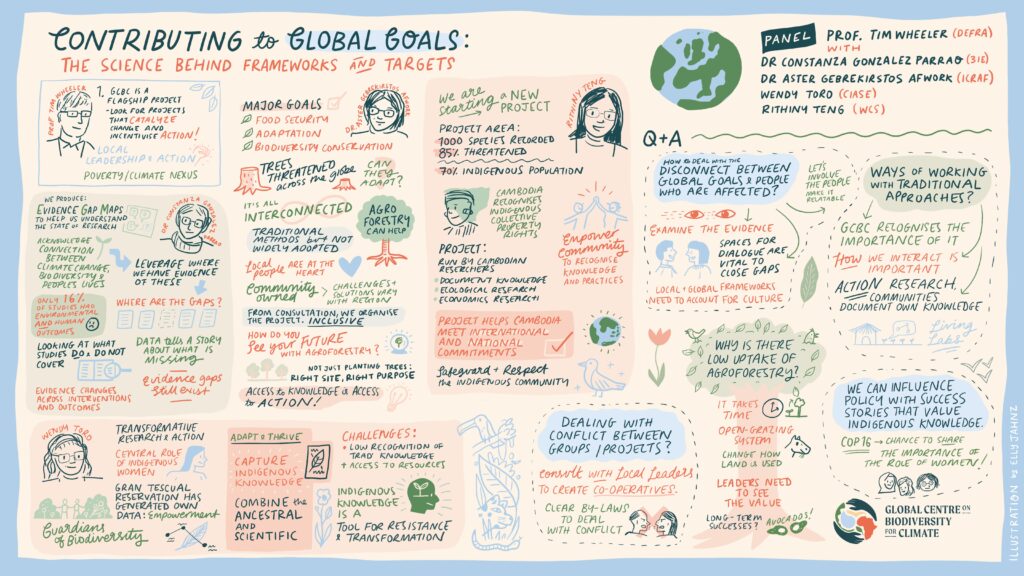
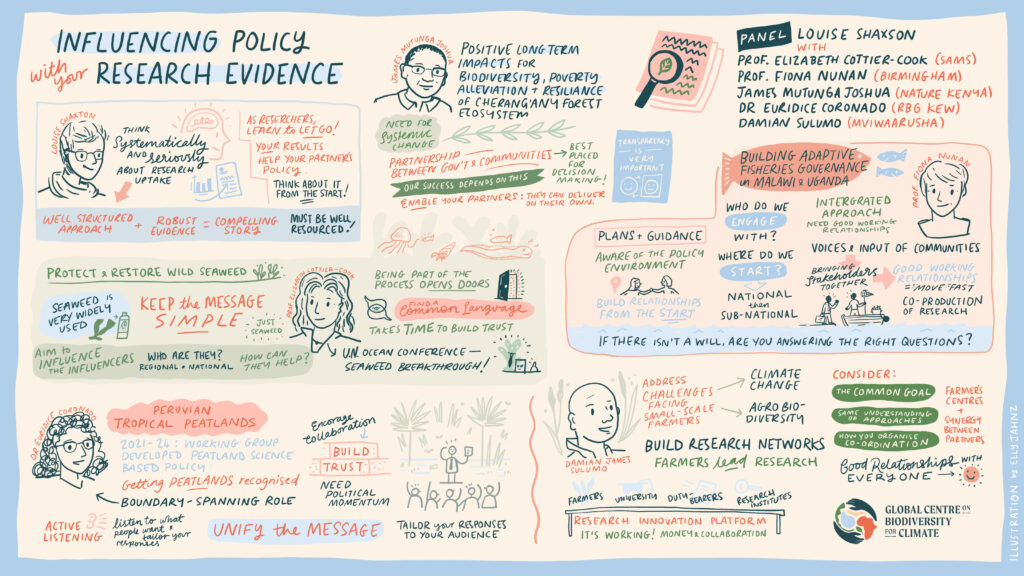
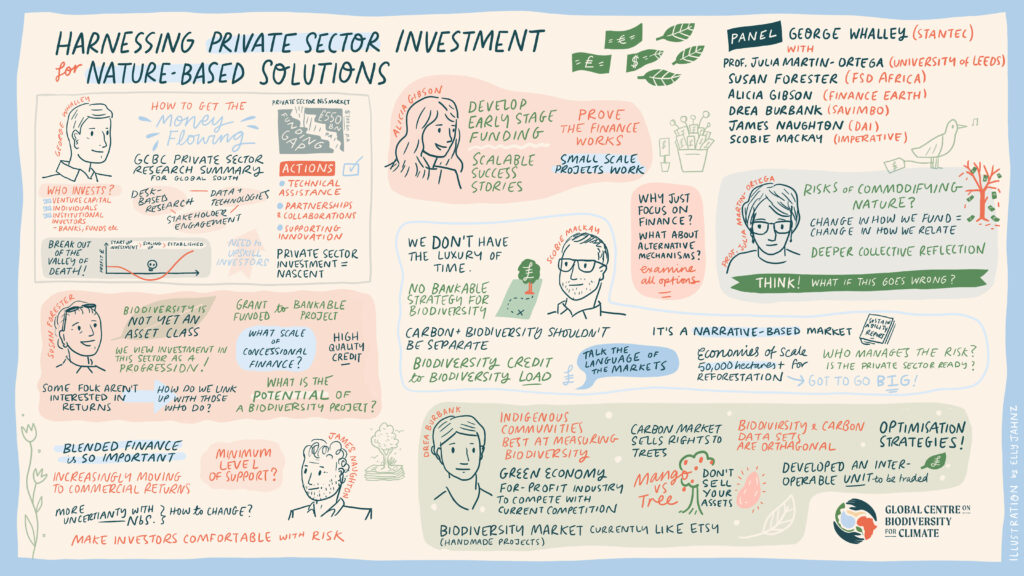
Additionally, the key takeaways from each panel session have been beautifully brought to life through the illustrations of Elly Jahnz.
 

Opening Session: Why supporting innovative research at the intersection of climate change, biodiversity loss, and poverty alleviation matters.


Panel Discussion 1: Contributing to global goals – Exploring the science behind national and global frameworks and targets.


Panel Discussion 2: Strengthening the connection between evidence and policy with a focus on practice from across the GCBC community.


Panel Discussion 3: Harnessing private sector investment in Nature-based Solutions.


For more information, read our blog on the Symposium, written by Samantha Morris, to explore the key outcomes from the full three-day event.

Thank you so much to all members of our GCBC research community who joined us in person and online for the symposium, and to our wonderful speakers, panelists, and chairs for your insight, expertise, and for generously giving your time to be with us.

The GCBC Research Grant Competition 3 (RGC3) Concept Note application has CLOSED

The GCBC Opportunities Portal for Concept Note submissions for the Third Research Grant Competition (RGC3) CLOSED at 23:00 hrs UTC, on Sunday, 16 March, 2025. Any applications submitted after that time and date will not be accepted or considered for the full proposal stage. 

The GCBC extends grateful thanks to all applicants who made submissions through the Opportunities Portal. We have been delighted with the responses to this grant call, particularly from the Global South.

Over the next few weeks we will be working through the applications, carrying out eligibility checks, technical evaluations, moderation and scientific meetings to establish the most suitable Concept Notes to take forward to the next round. 

RGC3 Themes

The two research themes of this RGC3 are:  

  • Theme 1: Using biodiversity to improve the climate resilience of agricultural, food and bioeconomy value chains – Transforming agrifood systems at scale to incorporate nature-based solutions that build biodiversity back into production landscapes to boost climate resilience and reduce poverty (open to all GCBC focus regions). 
  • Theme 2: Biodiversity hotspots in Small Island Developing States (SIDS) – Building sustainable businesses from nature to adapt to climate change, protect biodiversity, and tackle poverty (focused in SIDS). 

The GCBC, a UK Official Development Assistance (ODA) programme funded by the Department for Environment, Food and Rural Affairs (Defra), aims to fund a mixed portfolio of up to twenty grants in RGC3, covering a range of topics and geographies across both themes. Grants sums of between £100,000 and £1 million are offered for projects of 12-36 months duration. 

The GCBC will accept proposals for projects with activities in GCBC-eligible countries in Latin America (including Central America), the Caribbean, Sub-Saharan Africa, and South-east Asia and the Pacific and Small Island Developing States. A list of GCBC eligible countries is available here. To be accepted for funding under the GCBC programme projects must demonstrate: 

  • Fit to GCBC: All proposals need to address poverty alleviation and climate resilience, focusing on approaches that better value, protect, restore and sustainably manage biodiversity. 
  • Fit to theme: Proposals must address research questions within one of the themes set out above. 
  • GESI: All proposals must incorporate clear plans to factor in gender, equality and social inclusion from the outset. 
  • R&D: Proposed work must meet the definition of research and development: creative and systematic work undertaken to increase the stock of knowledge – including knowledge of humankind, culture and society – and to devise new applications of available knowledge (OECD, 2015). 


Research Grant Competition 2 (RGC2): The GCBC awards £13.4 million in UK ODA grants for research to find nature-based solutions to climate change and poverty reduction   

RGC2 awards 18 new project grants worth £13.4 million based on the theme: “Driving innovation in how biodiversity can support climate resilience and sustainable livelihoods through practice and governance”.

Initial concept note applications for the second GCBC research grant competition (RGC2) numbered 507 from lead delivery partners in 60 UK-ODA eligible countries. This response more than trebled the 155 applications submitted for the first round of grants in 2023. From the initial concept notes, 56 applications were selected to submit full proposals.    

Grant awards were made using several criteria, including applications’ contribution to the context of the RGC2 theme. These involved assessing applicants’ understanding of how addressing evidence gaps in the potential of nature-based solutions using less utilised species (plants, animals, insects, fungi, trees etc.) can contribute to:   

  • improving poor livelihoods through more resilience to climate change;  
  • meeting resource or service demands; and  
  • protecting and conserving traditional knowledge and biodiversity.  

Filling these evidence gaps is critical to finding innovative approaches to guide practice and governance.  

Climate change, biodiversity loss and poverty are three of the most pressing challenges facing the world today and are fundamentally inter-linked. Climate change, driven by human activity, is increasingly and negatively affecting people and the natural environment. Biodiversity loss, which also results from human activity, is causing degraded landscapes and soil and increasing food insecurity. This exacerbates climate risk by reducing the resilience of natural and managed ecosystems. Unfortunately, those living in poverty are often the most vulnerable and the least able to respond to the impacts of climate change and biodiversity loss. 

By working in partnership with scientists, research institutions and practitioners around the world, the GCBC seeks to develop innovative research and scalable approaches to the conservation and sustainable use of biodiversity. This will have an impact on ecosystem resilience to climate change, halting and reversing biodiversity loss, contributing to poverty alleviation and helping countries to achieve a nature-positive future. The GCBC is funded by the UK’s Department for Environment, Food and Rural Affairs working in partnership with DAI as the Fund Manager Lead and Royal Botanic Gardens, Kew as the Strategic Science Lead. 

The 18 projects awarded under RGC2 will be implemented in 16 UK ODA-eligible countries in the Global South; seven countries from Latin America (including Central America) and the Caribbean (Brazil; Colombia; Ecuador; Dominican Republic; Guatemala; Panama; Peru); six from Sub-Saharan Africa (Democratic Republic of Congo; Ethiopia; Ghana; Kenya; Tanzania; Republic of Congo); and three from South East Asia and the Pacific (Cambodia; Indonesia; Vietnam).  

Eleven of the RGC2 projects cover broad thematic areas: Agroforestry; Community led approaches; Integrated land / water management; and Forest restoration. Seven of the projects cover more uniquely focused research areas: Seagrass restoration; Carbon markets; Biodiverse seed bank; Mangrove restoration; Peatlands; Land use (landscape level); and Underutilised species for soil restoration.  

This new round of 18 diverse and innovative projects represents a consolidation of the ‘Global Centre on Biodiversity for Climate’ as Defra’s flagship ODA R&D programme.  These new projects will continue GCBC’s growing reputation for delivery of high-quality evidence about the effective and sustainable use of biodiversity for climate resilience and to improve livelihoods.” said Professor Gideon Henderson, Chief Scientific Adviser, UK Department for Environment, Food and Rural Affairs.

“As fund management lead, DAI is delighted to continue our relationship with Defra and especially to welcome the successful applicants who are joining the GCBC’s project portfolio for the next phase of the programme’s development. Through this project round, we will continue to support scientists, academics and research institutions working to build stronger capacity, increase collaboration, deliver high-impact projects and share learning on the biodiversity-climate-livelihoods nexus that will have an impact on ecosystem resilience to climate change, halting and reversing biodiversity loss and contributing to poverty alleviation,” said Luqman Ahmad, Senior Vice President, DAI. 

“As strategic science lead, the Royal Botanic Gardens, Kew also welcomes the new projects to the growing portfolio. The new evidence, data and knowledge across pressures/drivers, solutions and enablers for the different themes of the grant competitions will support the adoption of systems approaches in tackling the nexus of climate, biodiversity and livelihoods. By understanding and managing the complex interactions between science, society and the multiple interacting systems through temporal and spatial scales it will be possible to recommend solutions – orientated approaches for transformative change across different sectors and regions,” said Professor Monique Simmonds, Deputy Director, Science (Partnerships), The Royal Botanic Gardens, Kew.   

The 18 Projects funded by RGC2:

Assessing Carbon Credits as a Sustainable Funding Mechanism for Participatory Forest Management in Tanzania – Lead Grantee: Sokoine University of Agriculture, Tanzania (Country: Tanzania)

Biodiversity for climate and social resilience: Empowerment of coastal communities in sustainable production practices in Ecuador – Lead Grantee: Escuela Superior Politecnica del Litoral – ESPOL, Ecuador (Country: Ecuador)

Biodiversity science in support of community-led conservation of threatened local forests in Tompotika, Central Sulawesi: Protecting biodiversity, ecosystem services and climate resilient local livelihoods – Lead Grantee: Missouri Botanical Garden (MBG), USA (Country: Indonesia)

Biodiversity potential for resilient livelihoods in the Lower Omo, Ethiopia – Lead Grantee: University of Leeds, UK (Country: Ethiopia)

BREL-Borneo: Benefits of Biodiverse Restoration for Ecosystems and Livelihoods in Borneo – Lead Grantee: Royal Botanic Garden Edinburgh, UK (Country: Indonesia)

Cataloguing and Rating of Opportunities for Side-lined Species in Restoration of Agriculturally Degraded Soils in Sub-Saharan Africa (CROSSROADS-SSA) – Lead Grantee: University of Aberdeen, UK (Country: Ethiopia)

Creation of an Intercultural biodiverse Seed Bank with the indigenous “Resguardo Puerto Naranjo” for enhancing restoration and conservation efforts in degraded areas in the Colombian Amazon – Lead Grantee: Fundación Tropenbos, Colombia (Country: Colombia)

EMBRACE: Engaging Local Communities in Minor Crop Utilisation for Biodiversity Conservation and Livelihood Enrichment – Lead Grantee: Council for Scientific and Industrial Research-Crops Research Institute (CSIR-CRI), Ghana (Countries: Ghana and Kenya)

Enabling large-scale and climate-resilient forest restoration in the Eastern Amazon – Lead Grantee: Lancaster University, UK (Country: Brazil)

Exploring sustainable land use pathways for ecosystems, food security and poverty alleviation: opportunities for Indonesia’s food estate programme – Lead Grantee: University of Sussex, UK (Country: Indonesia)

Forest restoration on Indigenous lands: Restoring biodiversity for multiple ecosystem services, community resilience and financial sustainability through locally informed strategies and incentives – Lead Grantee: Smithsonian Tropical Research Institute, Panama (Country: Panama)

Integrated Land and Water Management of the Greater Amanzule Wetland System – Lead Grantee: University of Education, Winneba, Ghana (Country: Ghana)

NATIVE: Sustainable Riverscape Management for Resilient Riverine Communities – Lead Grantee: University of Lincoln, UK (Countries: Colombia and Dominican Republic)

Nature based solutions for climate resilience of local and Indigenous communities in Guatemala – Lead Grantee: University of Greenwich, UK (Country: Guatemala)

Realising the potential of plant bioresources as new economic opportunities for the Ecuadorian Amazon: developing climate resilient sustainable bioindustry – Lead Grantee: Universidad Tecnica Particular de Loja, Ecuador (Country: Ecuador)  

Recognising and rewarding the contribution of Indigenous knowledge for the sustainable management of biodiversity – Lead Grantee: Wildlife Conservation Society (WCS), USA (Country: Cambodia)

TRIALS: Translating Research into Action for Livelihoods and Seagrass: Establishing scientific foundation for seagrass restoration and blue carbon potential, with sustainable livelihood development for coastal communities in Central Vietnam – Lead Grantee: WWF-UK, UK (Country: Vietnam)

Using biodiversity to support climate resilient livelihoods in intact tropical peatlands – Lead Grantee: Royal Botanic Gardens, Kew, UK  (Countries: Peru, the Republic of Congo and the Democratic Republic of Congo)  


Photo Credit (Detail): Laitche


Biodiversity for Climate and Social Resilience: Empowerment of Coastal Communities in Sustainable Production Practices in Ecuador

Project Summary

Countries: Ecuador

Principle Investigator: Professor Julia Nieto Wigby, ESPOL

Project Description

The project aims to mitigate climate change by enhancing mangrove health, reducing human impact, and increasing fishing communities’ resilience while providing fair alternative incomes. Innovative techniques and approaches are applied to improve environmental, climate and social resilience along with novel finance solutions.

This involves: a) Ecosystem recovery – evaluating trophic structure recovery through habitat restoration strategies such as cultured black cockle (BC) restocking and red mangrove afforestation; b) Ecosystem protection – offering alternative livelihoods to reduce fishing pressure on natural banks by transferring technical mariculture capacities to fisher communities, along with environmental education and social empowerment for inclusive community governance systems; and c) Valorisation – internalising ecosystem services to determine real BC extraction and trade costs, and functional ecology valuation.

Communities will use key information to demand national policies to protect their territories and livelihoods.

Photograph (detail): Diego Tirira

TRIALS: Translating Research into Action for Livelihoods and Seagrass: Establishing scientific foundation for seagrass restoration and blue carbon potential, with sustainable livelihood development for coastal communities in Central Vietnam

Project Summary

Countries: Vietnam

Delivery Partner: World Wide Fund for Nature Vietnam (WWF-Viet Nam)

Principal Investigator: Nguyen Thanh Huy, (WWF-Viet Nam), Deborah Mackey, World Wildlife Fund (WWF)

Addressing key knowledge gaps on seagrass status, restoration, biodiversity and blue carbon in central Vietnam, while supporting climate‑resilient livelihoods and evidence‑based conservation policies through integrated ecological, social and economic approaches

Challenge

Seagrass ecosystems in central Vietnam are experiencing rapid decline, yet significant knowledge gaps persist regarding their distribution, ecological condition, biodiversity value and blue carbon potential. In areas such as Cu Lao Cham, the lack of recent, reliable data constrains effective conservation planning and investment. Current restoration efforts are further limited by the absence of locally adapted, evidence‑based techniques and weak integration of socio‑economic considerations.

At the same time, coastal communities dependent on fisheries and tourism face increasing climate risks, resource degradation, and limited access to sustainable livelihood alternatives. Low awareness and insufficient policy recognition of seagrass ecosystems continue to hinder coordinated action. These challenges underscore the need for interdisciplinary research to generate robust evidence, inform scalable restoration approaches, and strengthen links between science, policy, and community practice.


Insight

This project will address critical knowledge gaps by integrating ecological research, restoration science, and socio‑economic analysis to build a robust evidence base for seagrass conservation in central Vietnam. It will identify and map priority seagrass habitats, assess their ecological condition, biodiversity value, and blue carbon potential, and pilot locally adapted restoration techniques to inform scalable and sustainable approaches.
Through inclusive stakeholder engagement, the project will co‑develop climate‑resilient livelihood options aligned with seagrass conservation, strengthening community capacity and reducing pressure on marine resources. This integrated approach is expected to generate actionable ecological and socio‑economic insights, demonstrating the role of seagrass ecosystems as effective nature‑based solutions for climate mitigation and adaptation.
The project will also support evidence‑based policy development, including contributions to Vietnam’s Nationally Determined Contributions (NDCs) and emerging blue carbon opportunities. Early project experience and established partnerships indicate strong local interest, favourable conditions for policy uptake, and the feasibility of linking restoration outcomes with livelihoods and climate resilience.


Collaboration

This project is founded on strong multi‑stakeholder collaboration across international, national, and local partners. WWF‑UK will lead overall coordination, ensuring technical quality, financial management, and monitoring, while WWF‑Viet Nam will oversee in‑country implementation, drawing on its long‑standing presence and government partnerships. Scientific research and restoration design will be led by Hue University of Sciences (HUSC), ensuring rigorous assessment and locally adapted methodologies.

The Centre for Marine Life Conservation and Community Development (MCD) will support co‑management arrangements and sustainable livelihood development. Local coastal communities will act as active partners, while the Cu Lao Cham Nature Reserve management board will lead field surveys, stakeholder engagement, pilot restoration, and livelihood implementation. Engagement with national and provincial authorities, alongside collaboration with research institutions, NGOs, and development partners, will strengthen policy uptake, knowledge exchange and scalability.

Seagrass ecosystems remain under‑recognised despite their vital role in climate mitigation and coastal resilience. This project will address key knowledge gaps and translate science into scalable restoration and policy action, supporting ecosystem recovery while strengthening sustainable livelihoods in Vietnam.

Nguyen Thanh Huy, WWF-Viet Nam

Discover More

Nguyen Thanh Huy

Nguyen Thanh Huy holds an MSc in Ecology and is a marine conservation specialist with over 14 years of interdisciplinary experience across academia, applied research and international non‑governmental organisations. His work focuses on marine biodiversity conservation, coastal and blue carbon ecosystems, and community‑based resource management.

Nguyen Thanh Huy has contributed to research and conservation initiatives through roles in national research institutions, marine protected area management and international development organisations.


Photograph (detail): Lamiot

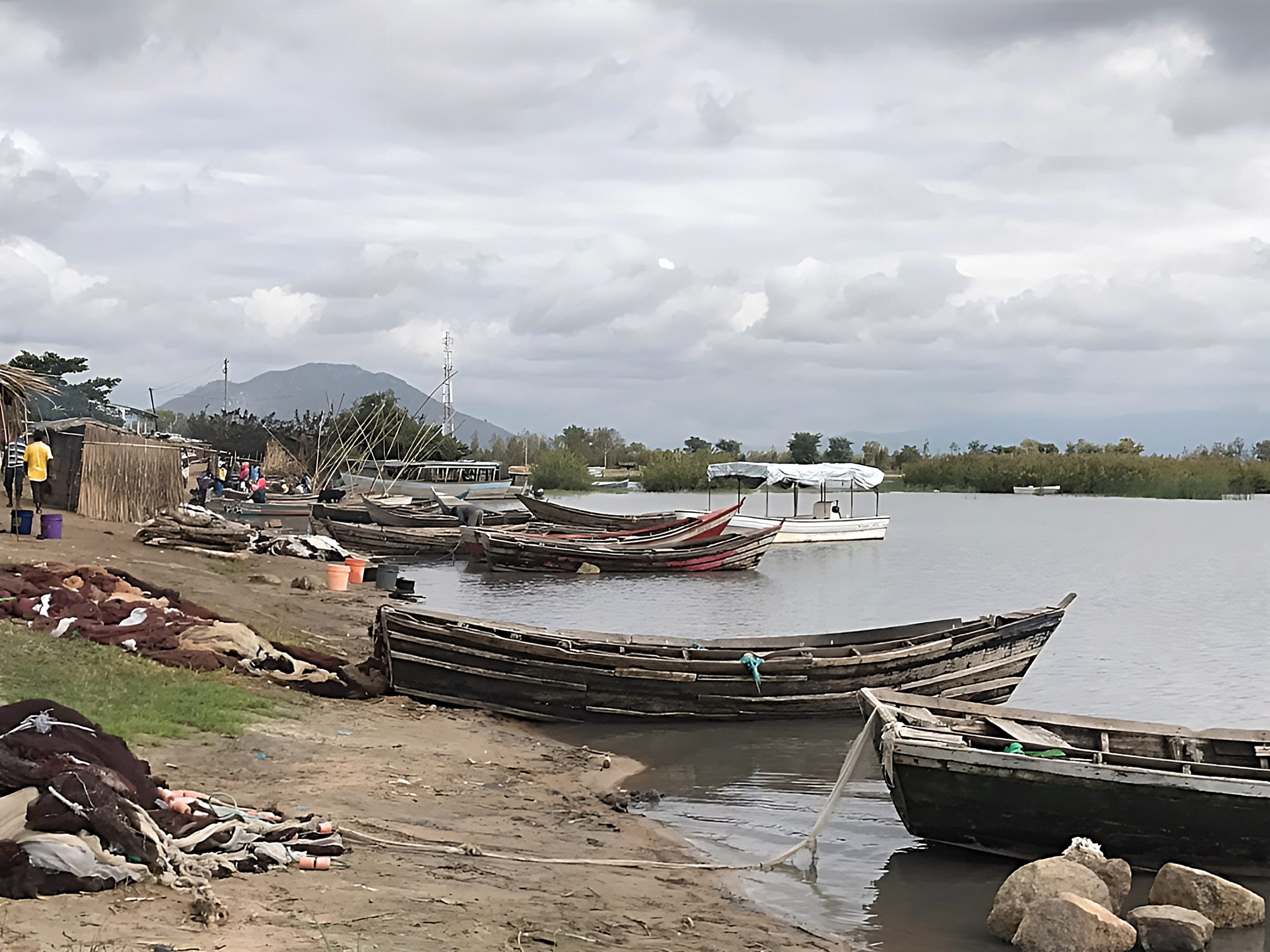
Building Adaptive Fisheries Governance Capacity

Project Summary

Countries: Malawi, Uganda

Delivery Partner: University of Birmingham

Principal Investigator: Professor Fiona Nunan, Professor of Environment and Development, International Development Department, University of Birmingham

The project aims to strengthen capacity for adaptive fisheries governance in Malawi and Uganda. Adaptive fisheries governance is an integrated approach, aiming to protect biodiversity, build climate resilience and improve livelihoods.

Challenge

Fisheries are under threat across the world, with stocks and biodiversity threatened by overfishing, illegal fishing practices and poor management. Loss of aquatic biodiversity and changes in rainfall and temperature are increasing pressures on small-scale fisheries livelihoods and food security.

Governance systems and policies in many countries are not yet effectively responding to these challenges. Governance has often been found to be lacking sufficient coordination between parts of government, and between communities and government, are under-resourced and do not include measures to protect biodiversity or build capacity to adapt to climate change.

Fisheries policies and governance systems need to take more account of biodiversity loss and protection, and better recognise the multiple and increasing challenges resulting from climate change.

Insight

To address these issues, the project is working with key actors to assess adaptive fisheries governance capacity at national, district and local levels, pilot interventions with communities that address the challenge, support networking within and between communities and government, and develop plans for building adaptive fisheries governance capacity.

From the assessment of adaptive fisheries governance capacity, the project has learnt that capacity can be built by:

1. Strengthening existing governance systems, particularly co-management, where communities work with government to manage fisheries. Strengthening can include increasing interaction, mentoring, financing, representation and participation, particularly of women and youth.2. Improving the generation and sharing of information. This includes more consistent support to communities in monitoring fish catches and sharing research findings with government, communities and NGOs.
3. Strengthen coordination between the fisheries and environment sectors to better protect biodiversity, including protection of fish breeding and nursery sites, which may be designated as sanctuaries or protected areas.
4. Resource materials and training can support government officers, communities and NGOs to better protect biodiversity and adapt to climate change, with regular sensitization of communities and political representatives. Adaptation strategies should be gender sensitive, reflecting gender norms and roles found in many fisheries.


Collaboration

The project is working closely with the Government of Malawi’s Department of Fisheries and the Government of Uganda’s Directorate of Fisheries Resources, including fisheries staff at district and community levels. The project is also working closely with fishing communities on lakes Chilwa and Malawi, in Malawi, and lakes Kyoga and Victoria in Uganda. Government officers, NGOs and community members are involved in the planning, data collection and data analysis of the project.

Adaptive fisheries governance is really the only way forward for the fisheries sector. The biodiversity and climate crises evident across the world need integrated responses. This means greater collaboration between stakeholders and government sectors at all levels and for the fisheries sector to take more responsibility for biodiversity and strengthen its response to climate change. At the same time, fisheries livelihoods and the contribution of fisheries to food security must be supported.

Prof Fiona Nunan, University of Birmingham

Professor Fiona Nunan

Fiona’s interests and experience focus on natural resource governance and management in developing country settings, particularly within inland fisheries and coastal locations in East and Southern Africa, and on exploring the links between poverty and the environment. She uses institutional analysis but also has interests in how power and gender relations, and the wider political economy, affect the practice and outcomes of natural resource governance.